Installing a water refill station in your hotel?
Here’s how to make sure it gets used
30 Okt 2026 · Reading time: 4 min
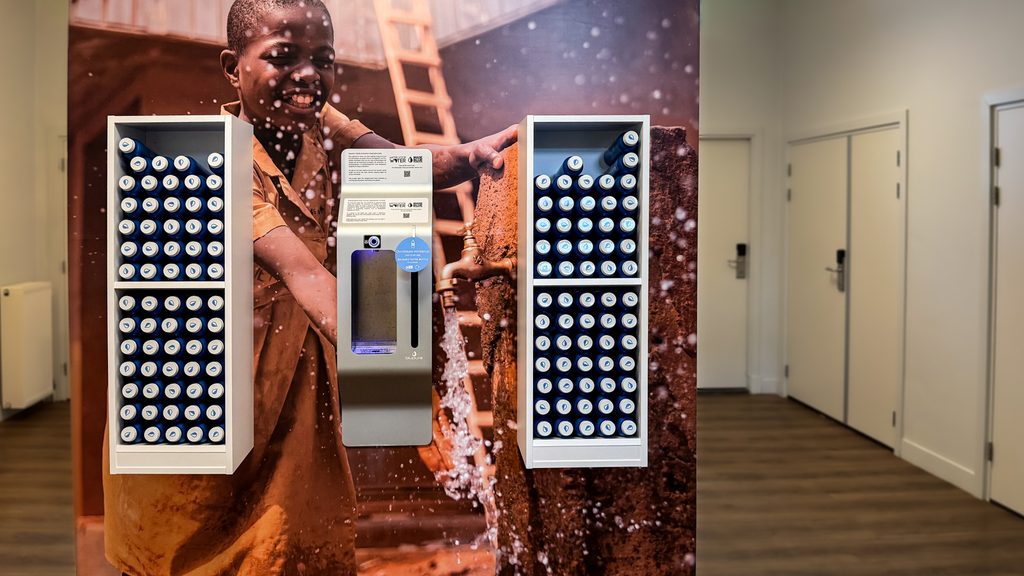
Installing a water refill station in your hotel to cut down on single-use packaging? Great! But how do you make sure it actually gets used? A refill station only makes an impact if you put it in the right place, with refillable bottles within reach.
Convenience beats good intentions
For the study The Plastic Pulse (Sajedi & An, 2026, Journal of Cleaner Production), researchers at Concordia University surveyed more than 15,000 people in 81 countries. They grouped participants based on two things: why they use plastic bottles, and where.
The researchers called the group with the highest use of single-use bottles the Practical Travelers. These are people who reach for a plastic bottle because it’s easy when they’re on the move or staying somewhere temporarily: in hotels, while travelling, on planes, at conferences and at events. It isn’t about taste or image, but about ease in the moment. More than 65% of this group named convenience as their main reason for choosing a single-use option.
There’s good news too. According to lead author Sarah Sajedi, almost all respondents said they would avoid plastic bottles if a clean alternative were readily available. When asked what they would choose if no plastic bottle was available, filtered water scored highest (81.7%) and tap water lowest (39.3%), suggesting offering filtered water would already help people make a better choice.
Distance makes the difference
Even so, a filtered refill station won’t solve the problem on its own. Where you put it matters too. After all, for the Practical Traveler, the alternative has to be readily available.
Research along the Brisbane River (Willis et al., 2019, Sustainability) supports this. Filtered refill stations were installed at litter hotspots. Plastic bottle litter decreased once a station came into use. But according to the researchers, the chosen location meant the approach didn’t reach its full potential: people had to walk relatively far to refill.
What does this mean in practice? In a hotel, place the refill station where guests already pass, not at the end of a corridor. Think of the reception desk or the exit, the breakfast area, the gym and possibly every floor. In conference and meeting areas, put it by the coffee or break station.
A refill station nearby is only half the job done
Even a well-placed refill station is only half the solution. People also need to have a refillable bottle on hand, and that’s often where things go wrong. At a large tech company where almost everyone had been given a refillable bottle, half still used single-use bottles from time to time. The most common reason, cited by 58%, was convenience or forgetting their bottle (Putnam-Farr et al., 2023).
How do you solve that? There’s an entire field devoted to it: choice architecture, also known as “nudging”. The largest analysis to date combined more than 200 studies. Changes to the environment itself tend to work better than information or reminders (Mertens et al., 2022). That means what the default is, what’s available and how close it is. These three levers have the strongest evidence, and all three can be applied to a refill station.
1. Make refillable bottles the default
People tend to stick with whatever is already in place. In a German study of almost 42,000 households, green electricity was pre-selected as the default. Nearly ten times as many people then chose green electricity, even though it cost more (Ebeling & Lotz, 2015). Notably, even people who weren’t actively interested in it stuck with the green option.
In a hotel, that means: place a refillable glass bottle in every room as standard and remove single-use packaging from the room. Otherwise, those remain the easiest choice.
2. Make sure bottles are available
What’s on offer is what gets chosen. When Cambridge university cafeterias doubled the share of vegetarian dishes, vegetarian sales rose by 8 to 15 percentage points, while total sales stayed the same (Garnett et al., 2019). The biggest effect was among people who usually chose vegetarian the least. Those are exactly the people you want to reach.
Applied to the refill station: make sure a refillable bottle is always available, either for sale or as a gift, for anyone who doesn’t have their own with them.
3. Place bottles within reach
Distance matters. At ten schools in Boston, researchers placed cups next to the water fountains in the cafeteria. The share of students drinking water nearly doubled compared with the control schools (Kenney et al., 2015). Research on snacking shows that even an extra half metre of distance leads to less consumption (Maas et al., 2012). A review of multiple studies confirms this pattern (Hollands et al., 2019).
So place your refillable bottles right next to the refill station, so that grabbing and filling are within reach and remain a single action. Want to sell them? Consider a small vending machine next to the refill station. If that won’t fit or isn’t possible for other reasons, put up a clearly visible sign with a photo of the bottle, saying where guests can buy one if needed. The same principle applies at the point of sale: make the refillable options more visible and easier to reach than the single-use alternatives. Finally, you can also offer refillable bottles on request, free or charged to the room.
What about reminders?
Reminders are a useful addition, as long as you put them in the right place. Putnam-Farr and colleagues tested posters asking: “Are you drinking from a reusable bottle today?” Posters by the water dispenser had only a temporary effect. Posters by the desks, where employees kept their bottles, led to a lasting habit. The explanation: a reminder at the refill station often comes too late. By then you’ve already forgotten your bottle, and hardly anyone goes back for it.
You can apply the same principle in a hotel. Remind guests where they keep their bottle: in their room, by the door or their room water, with a note or sign telling them about the location of the refill station(s). Are the bottles downstairs, for instance at the refill station in the lobby? Then place the reminder somewhere guests pass earlier, like the lift, so they know where to find the bottles and the refill station.
Do you sell bottles in the lobby shop, away from the refill station? Then you can also put up a sign by the drinks shelves: “Drinking from a refillable bottle today? You’ll find our refill station with fresh filtered water here →”. That’s no longer an early reminder, but a nudge at the moment of choice. Here too, make the refillable bottles easier to reach than the single-use options.
How our ambassadors do it
We see these levers in action at Made Blue ambassadors. TRIBE London Canary Wharf makes refillable glass the standard in its rooms, with refill stations on every floor. Kontakt der Kontinenten, one of the largest buyers of our refillable aluminium bottles, focuses on availability and proximity: the refill stations are next to the coffee corner by the conference rooms, with refillable bottles right beside them.
With Made Blue’s refillable bottles, hotels don’t just reduce single-use packaging and the costs that come with it. Every bottle also contributes to access to clean drinking water through Made Blue’s water projects.
Together with Made Blue, these hotels also encourage their guests to save water where it makes the biggest difference: in the room, through a linen policy, and in the shower. They turn those savings into micro-donations per room per night. That way, every overnight stay also contributes to access to clean drinking water for the people who need it most.
Sources
Sajedi, S. & An, C. (2026). The plastic pulse: How global water consumption behaviors shape exposure to nano- and microplastics from single-use plastic water bottles. Journal of Cleaner Production, 563, 148459.
Concordia University (2026). Concordia researchers find convenience, drinking water access and advertising drive global bottled water consumption (persbericht).
Willis, K., Hardesty, B.D., Vince, J. & Wilcox, C. (2019). The Success of Water Refill Stations Reducing Single-Use Plastic Bottle Litter. Sustainability, 11(19), 5232.
Putnam-Farr, E. e.a. (2023). Forgot Your Bottle or Bag Again? How Well-Placed Reminder Cues Can Help Consumers Build Sustainable Habits. Journal of the Association for Consumer Research, 8(3).
Mertens, S., Herberz, M., Hahnel, U.J.J. & Brosch, T. (2022). The effectiveness of nudging: A meta-analysis of choice architecture interventions across behavioral domains. PNAS, 119(1).
DellaVigna, S. & Linos, E. (2022). RCTs to Scale: Comprehensive Evidence From Two Nudge Units. Econometrica, 90(1), 81–116.
Ebeling, F. & Lotz, S. (2015). Domestic uptake of green energy promoted by opt-out tariffs. Nature Climate Change, 5, 868–871.
Garnett, E.E., Balmford, A., Sandbrook, C., Pilling, M.A. & Marteau, T.M. (2019). Impact of increasing vegetarian availability on meal selection and sales in cafeterias. PNAS, 116(42), 20923–20929.
Kenney, E.L. e.a. (2015). Grab a Cup, Fill It Up! An Intervention to Promote the Convenience of Drinking Water and Increase Student Water Consumption During School Lunch. American Journal of Public Health.
Hollands, G.J. e.a. (2019). Altering the availability or proximity of food, alcohol, and tobacco products to change their selection and consumption. Cochrane Database of Systematic Reviews, CD012573.
More News
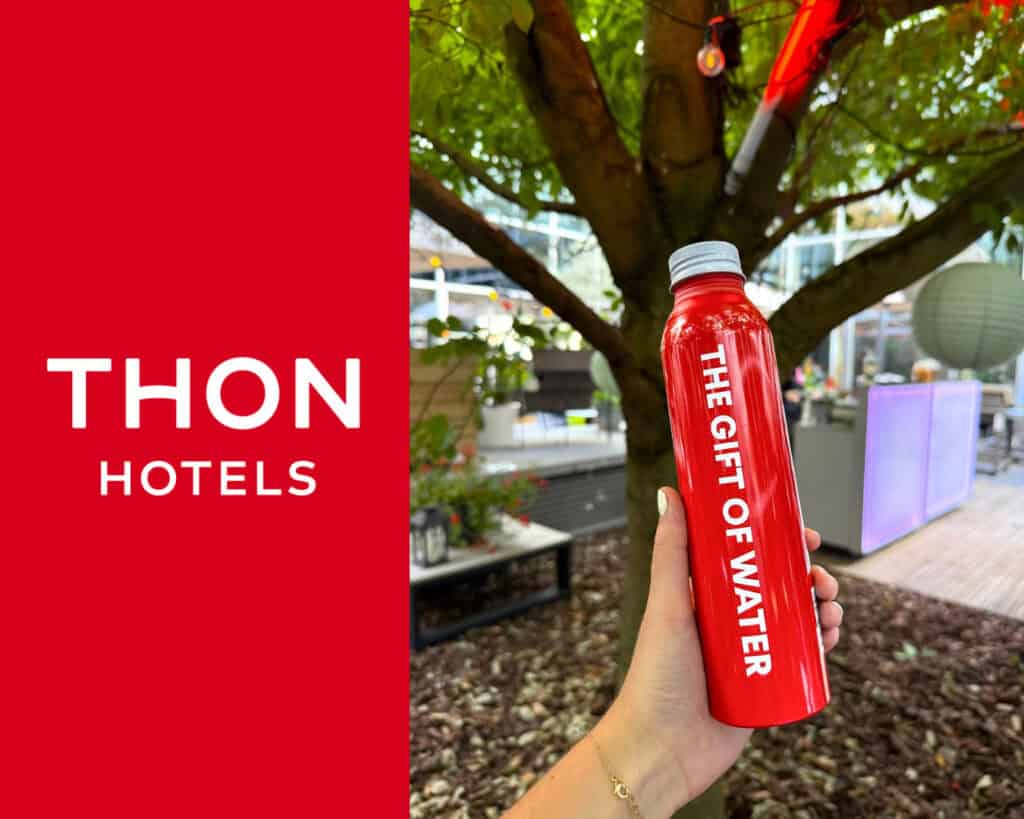
#PlasticFreeJuly – Thon Hotels introduces refills
Thon Hotels introduces reusable water bottles and refill stations in partnership with Made Blue during #PlasticFreeJuly.

Reusable water bottles for hospitality
Surprise guests, customers and employees with reusable water bottles and put an end to the nonsense of single-use packaging together with Made Blue Foundation.

Want to save water?
Five Made Blue ambassadors offer water-saving products and inspiration to find new ways of dealing with water, at home and at work.
Want to make clean water available for all?
Discover how your organisation can make impact in water scarce regions around the globe.
Made Blue water Projects
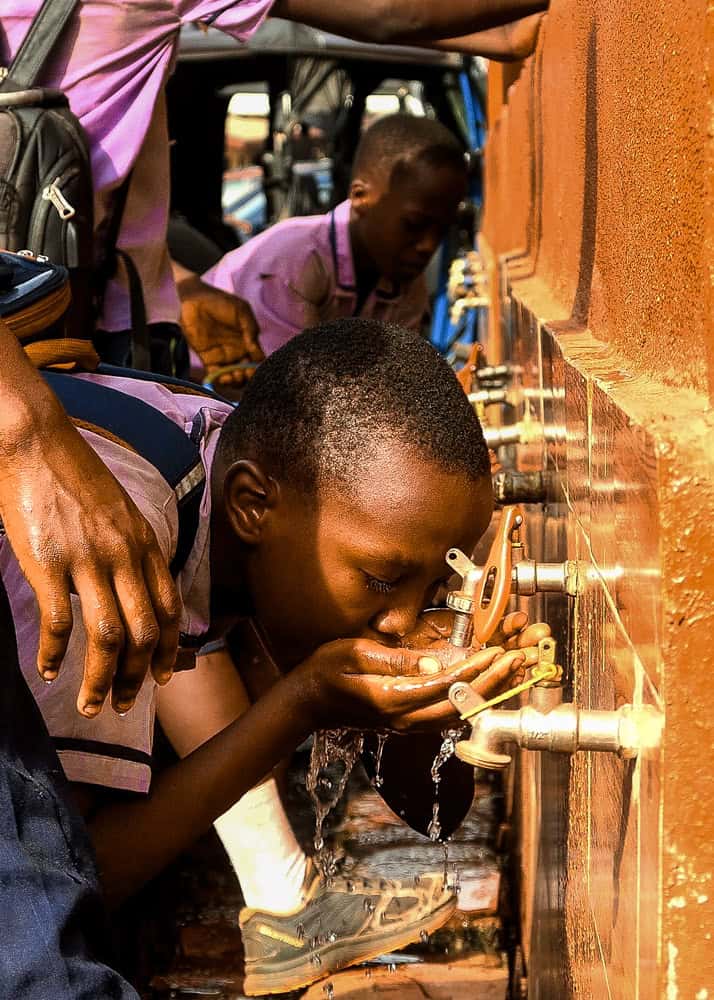
SIERRA LEONE: WATER AND NUTRITION AT SCHOOLS
With 7 water kiosks and the provision of milk powder for school meals, we help more than 55,000 people to a better future.
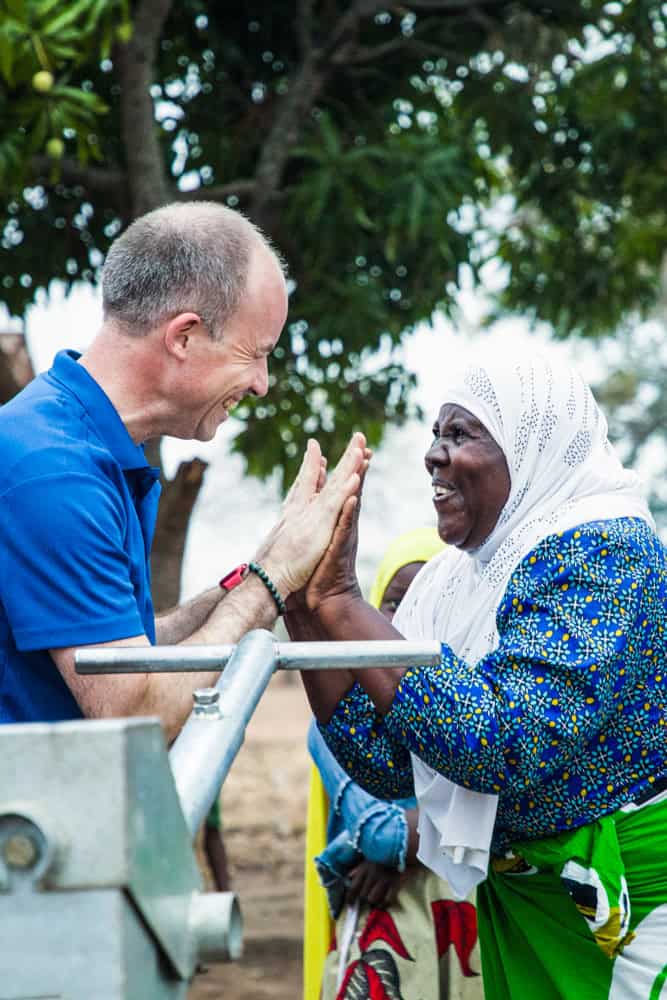
MALAWI: MADZI FOR MALAWI
In Malawi, more than 7 million people lack clean water. We are going to change this by building and repairing water points.
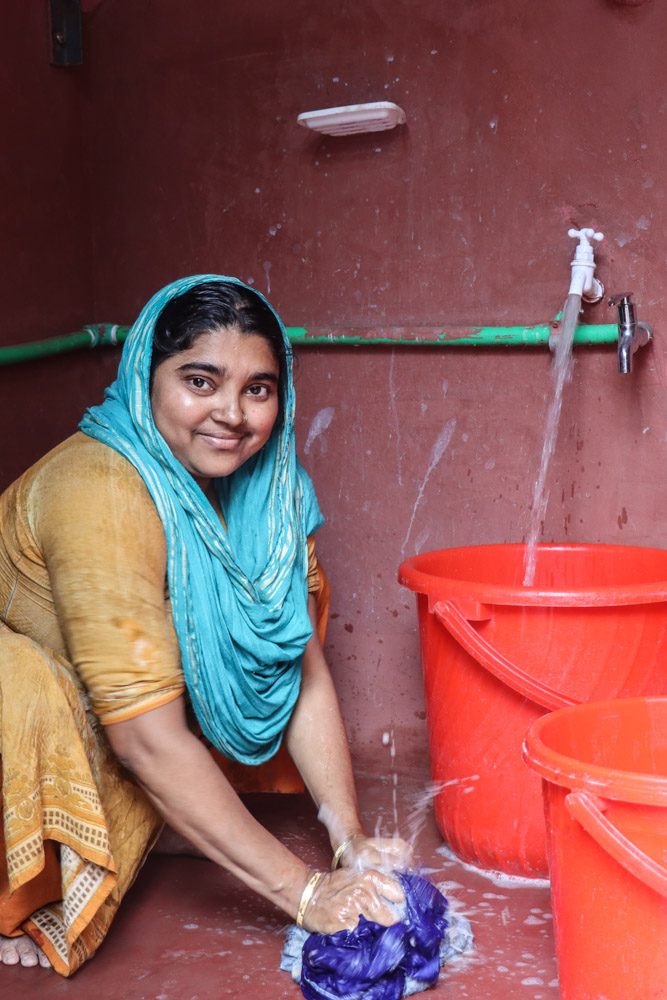
BANGLADESH: MINI GRIDS FOR HOUSEHOLDS
In Bangladesh, mini water networks will provide 33,670 people with direct access to clean drinking water.
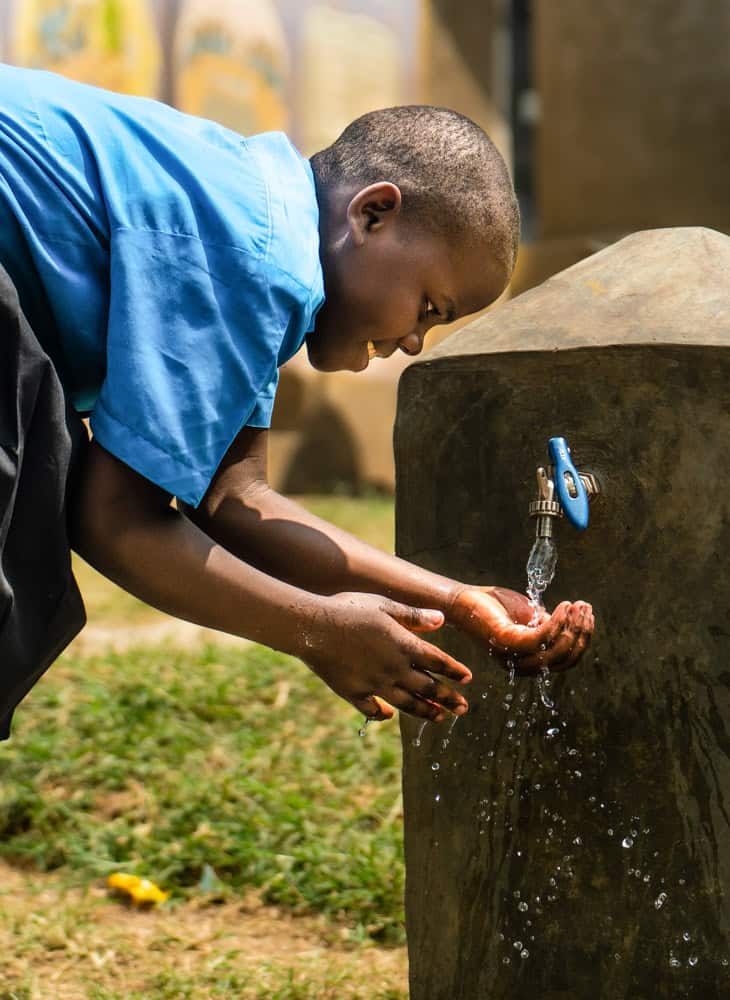
UGANDA: WASH, LEARN & SHARE
In Uganda we place a greater emphasis on sustainability and knowledge sharing, with girls, women and local entrepreneurs playing a central role.

SIERRA LEONE: WATER FOR A HEALTHY START
In Sierra Leone, we help young and expectant mothers and their children live healthy and safe lives by investing in essential facilities for health centres.
MAKE impact with the water you use, save, sell or serve
We are the Made Blue Foundation.
Our mission: clean drinking water for all.
Want to help make it happen?
Want to know more about
our water projects?
From households in Bangladesh to villages in Nepal and remote schools in Ethiopia — every Made Blue project brings sustainable clean drinking water closer to reality.
Learn about our projects and the impact we’re making together:
Bangladesh: Mini grids for households
In Bangladesh, mini water networks will provide 33,670 people with direct access to clean drinking water.
Read moreSierra Leone: Water and nutrition at schools
With 7 water kiosks and the provision of milk powder for school meals, we help more than 55,000 people to a better future.
Read moreUganda: Wash, Learn & Share
In this follow-up of our WASH & Learn project in Uganda, we place an even greater emphasis on capacity building and sustainability, with a central role for entrepreneurs, women and girls.
Read moreMalawi: Madzi for Malawi
In Malawi, more than 7 million people lack clean water. We are going to change this by building and repairing water points.
Read moreSierra Leone: Water for a good start in life
We are helping young and expectant mothers and their children live healthy and safe lives by investing in health center facilities in Sierra Leone.
Read moreFinancing for WASH entrepreneurs
One in four rural water points in Africa is out of service, often because there is no viable business model for repair and maintenance. We want to change that.
Read more