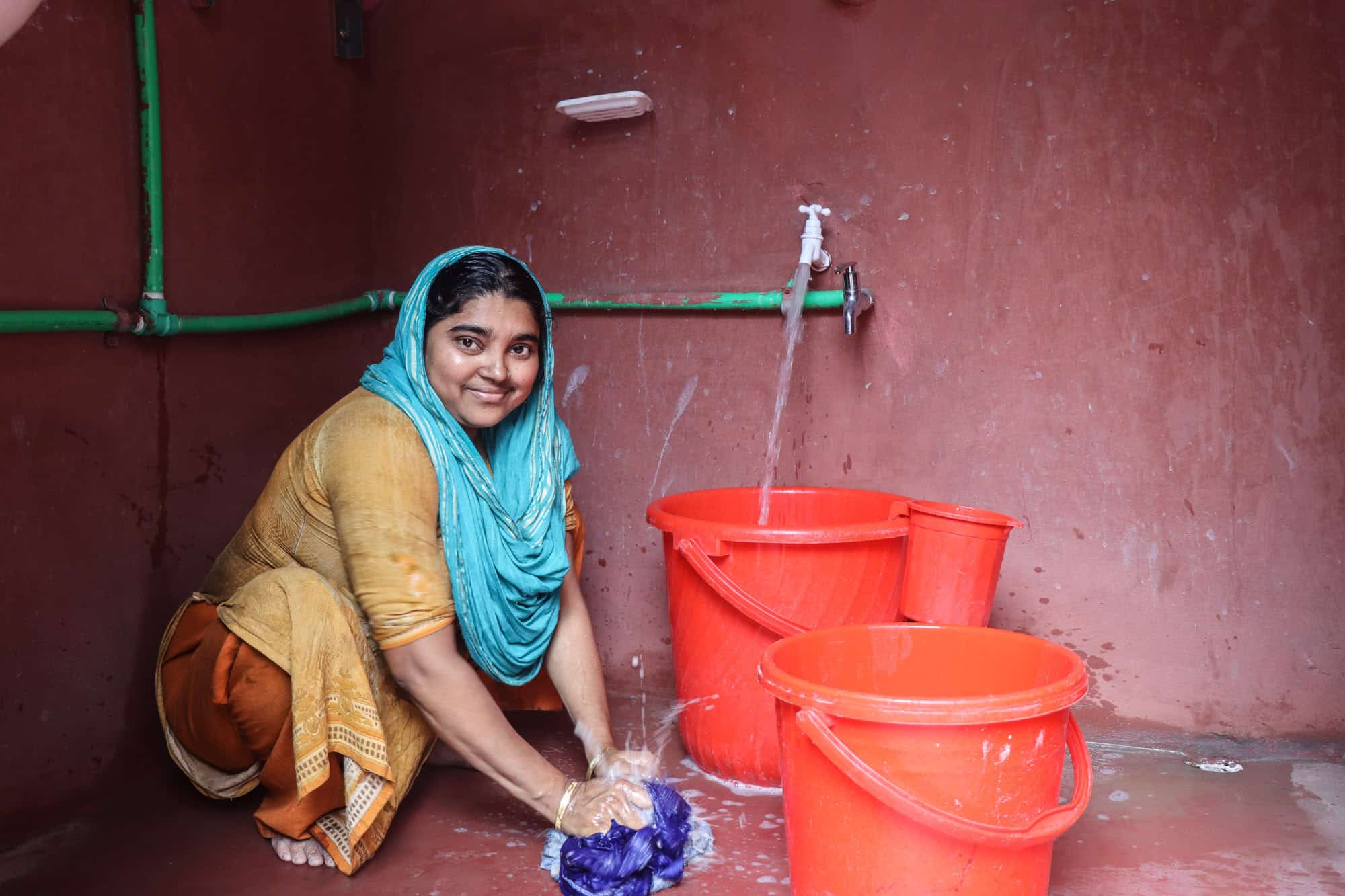
Water networks for families
In Bangladesh, we’re helping Max TapWater grow into a sustainable social enterprise that brings reliable water connections to households in remote communities—and keeps the water flowing for generations to come.
Bangladesh
country
130
grids
2022-2027
period
33.670
people
Bangladesh
In Bangladesh, 73 million people still lack access to water at home. Only 5% of rural households have access to safe piped water. Particularly in remote villages, centralised water networks are often unavailable, leaving families reliant on shared wells and surface water.
As a result, women and girls in particular spend an average of 90 minutes a day collecting water. This takes away time they could spend on education, work or other activities. Moreover, the water is often contaminated, increasing the risk of illness and malnutrition.
Click on the marker to zoom in
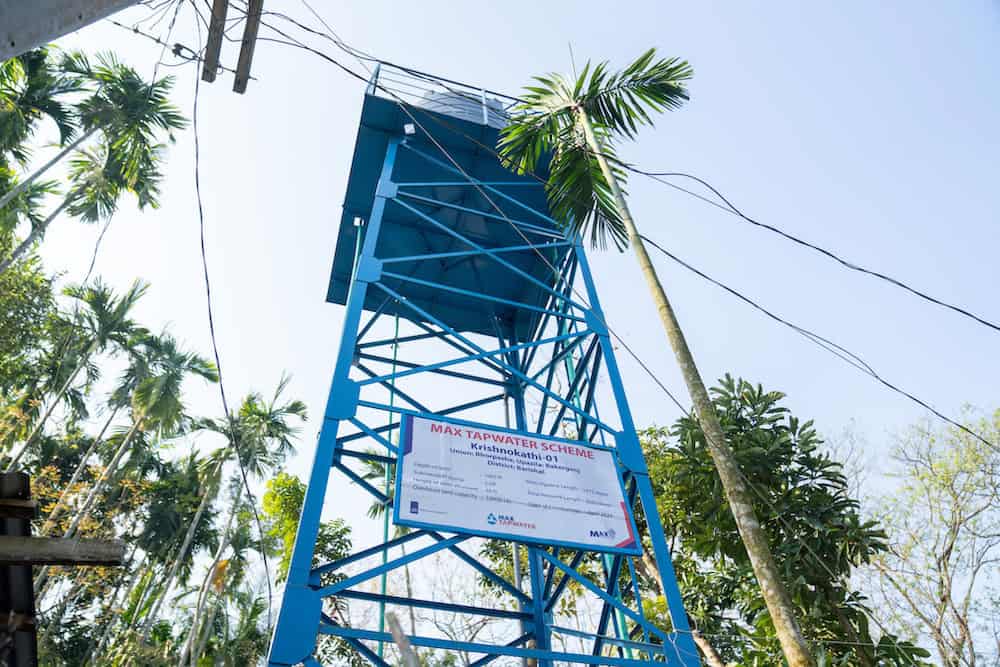
Max TapWater
We want to change this through Max TapWater, a social enterprise that builds small-scale water networks in villages beyond the reach of conventional water services. This provides households with a safe, affordable and reliable water connection at home.
By supporting a local enterprise, we help ensure that the infrastructure is not only built, but also managed and maintained for the long term.
“
Before having Max TapWater connection, I had to carry water far from my house. That’s why I did not have that much time to help my children on their study. Also, I got sick most of the time. But after having Max Tapwater connection I can now able to pay attention to my children and I don’t get sick at all.
— Suraiya Bilkis, Max TapWater customer
“
Safe, affordable and reliable water at home
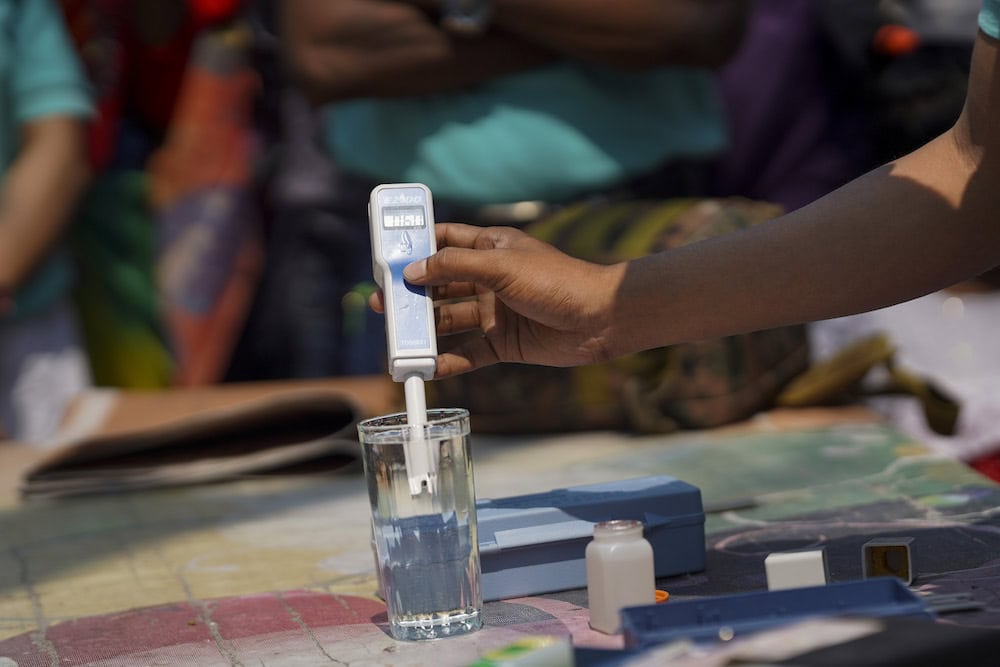
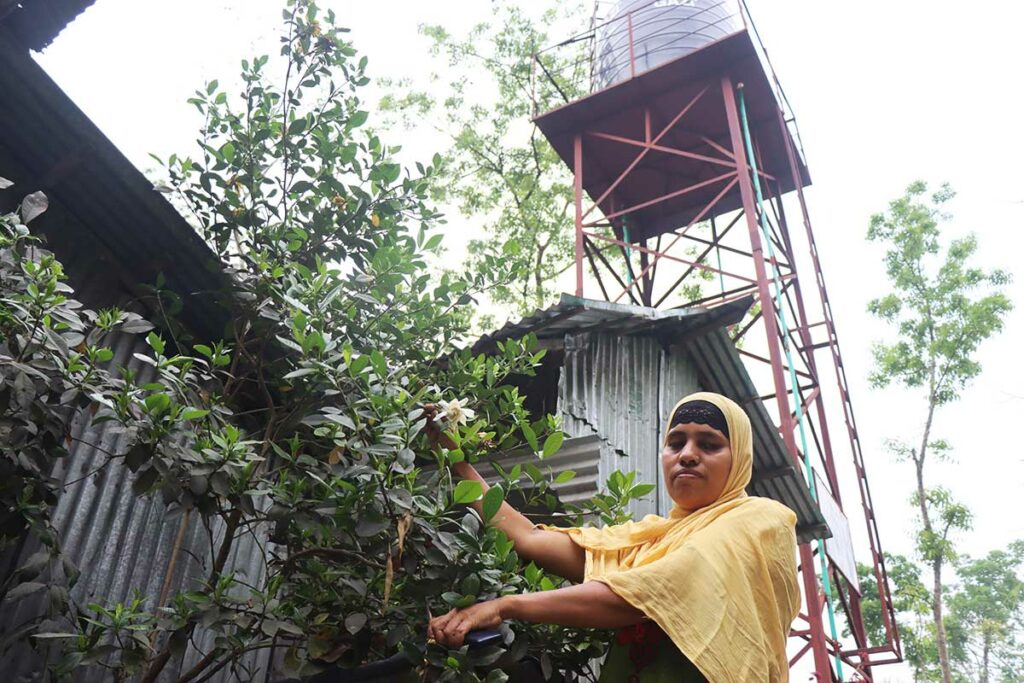
With Max TapWater, families have access to good-quality water 24 hours a day, receiving 80 to 100 litres per person per day through up to three taps in their home. This is achieved using relatively simple and affordable technology. Each network connects 40 to 70 households to an elevated water tank. The groundwater is tested and treated where necessary before flowing from the tank to households by gravity. This means water remains available during temporary power outages.
The networks are designed to last at least 15 years—and with proper maintenance, they can remain operational for much longer.
Entrepreneurship for clean drinking water
What makes this project special is that it sets a flywheel in motion. Rather than funding one-off infrastructure that gradually deteriorates after completion, we are helping to build a sustainable local water enterprise. The revenue generated by MaxTapWater provides a foundation for maintaining and repairing the infrastructure when needed. This allows the networks to provide households with reliable drinking water—not only today, but for generations to come.
Latest updates of this project
Building a water company in rural Bangladesh: the challenges
Leaks, electricity shortages, finding new customers and collecting payment. Can they make it work?
Read moreBreaking Aid Dependency With results-based financing
Find out how we’re breaking aid dependency with results-based-financing in Bangladesh.
Read moreUpdate: 85 of 130 water networks completed
Discover the latest progress of our Max Tapwater project in Bangladesh.
Read moreBushra’s personal story
We’ve supported the Max Tapwater project to realise 80 water networks in different locations in Bangladesh since 2022. Aside from direct access to clean water and the creation of jobs, the project…
Read more