Freetown: where clean water and nutrition come together
Freetown doesn’t ease you in.
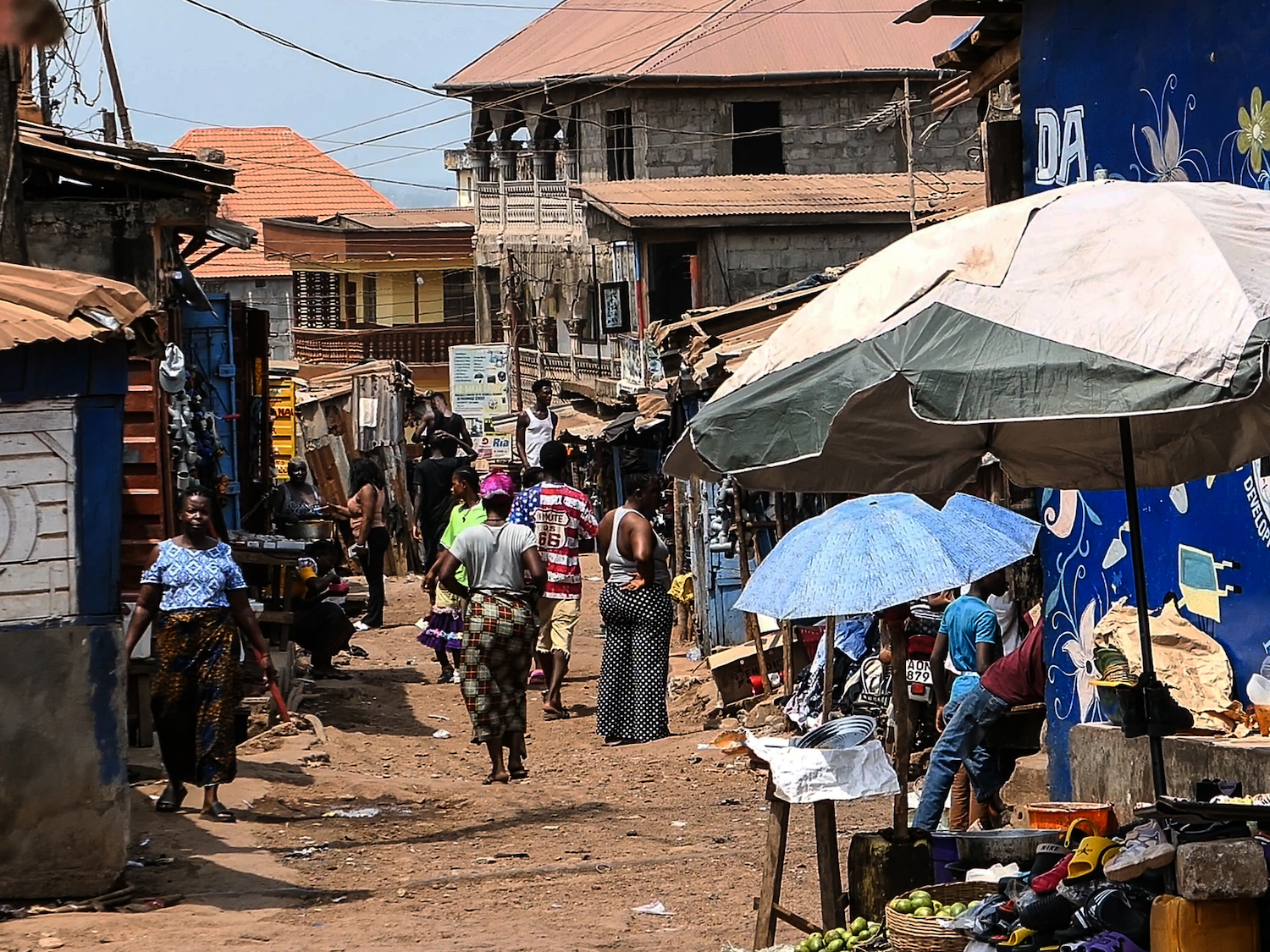
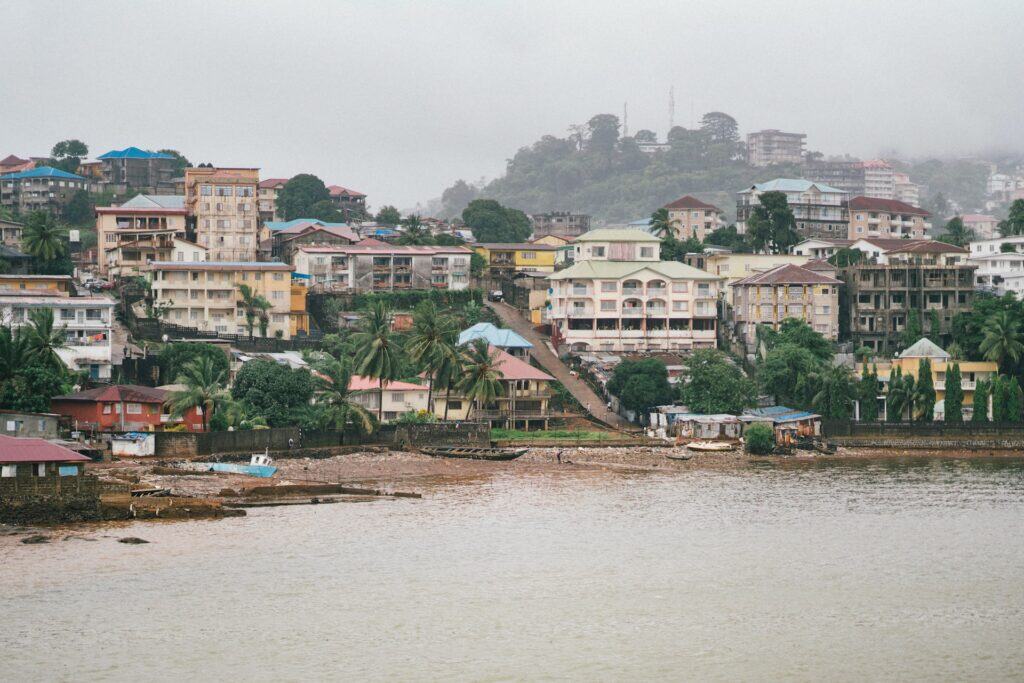
The city seems to rise straight out of the Atlantic and lies amid rolling hills of lush tropical and bio-diverse forests. Dense, humid and alive. Traffic moves in never ending waves, markets spill into the streets, and everywhere you look, people are building, trading and moving goods. Behind all that energy lies a quieter reality:
Access to clean water and healthy nutrition isn’t a given.
Together with Made Blue ambassadors, Hoogwegt and Vreugdenhil Dairy Foods, we travelled to Freetown, Sierra Leone to visit co-funded projects in underserved communities of this bustling capital.
25 April 2026
Infrastructure or water scarcity?
Paradoxically, water itself isn’t scarce in Freetown. Rainfall is abundant and groundwater is available. But the infrastructure to capture, treat and distribute it hasn’t kept pace with the city’s growth.
The city’s water infrastructure was built for around half a million people, while today close to 2 million call it home. As Freetown expanded, informal settlements grew faster than water systems could keep up.
Experts on the ground from World Vision Sierra Leone showed us how our funds are being implemented in the very communities that have grown beyond the reach of existing infrastructure.
Clean water for the community, by the community.
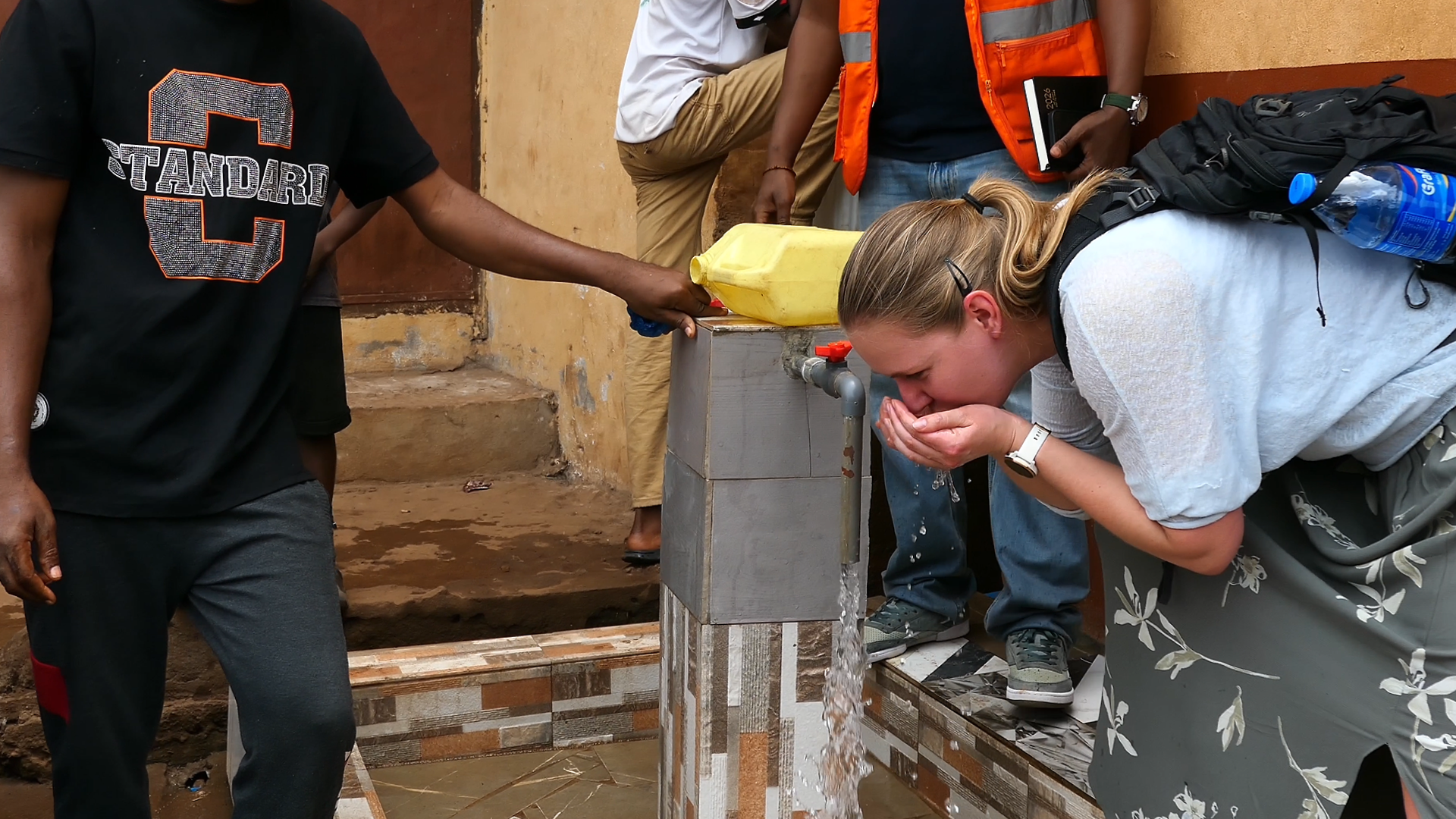
Kissy Shell sits in the eastern part of Freetown, an informal part of the city where water infrastructure hasn’t caught up. Here, a new solar-powered borehole now stands in the middle of daily life, serving the community and it’s market.
Clean water close to home is very welcome where women previously faced gender-based violence while collecting water, and children regularly missed school to participate in this daily chore.
Next to the new borehole, a tap delivers clean water and an adjacent kiosk sells hygiene related products, like sanitary pads, soap, disinfectant alcohol and toothpaste. Small user fees from the water tap and sales from the kiosk fund maintenance of the borehole, replacing charity with a local watereconomy designed to sustain itself.
“
Now that there is a water point in their community, clean drinking water is much more accessible. Hygiene has improved, people are no longer getting sick from unsafe water, and children can attend school. Something we often take for granted — clean drinking water from a tap — is truly life-changing here.
Ingrid van Waes, Hoogwegt
”
clean water at school
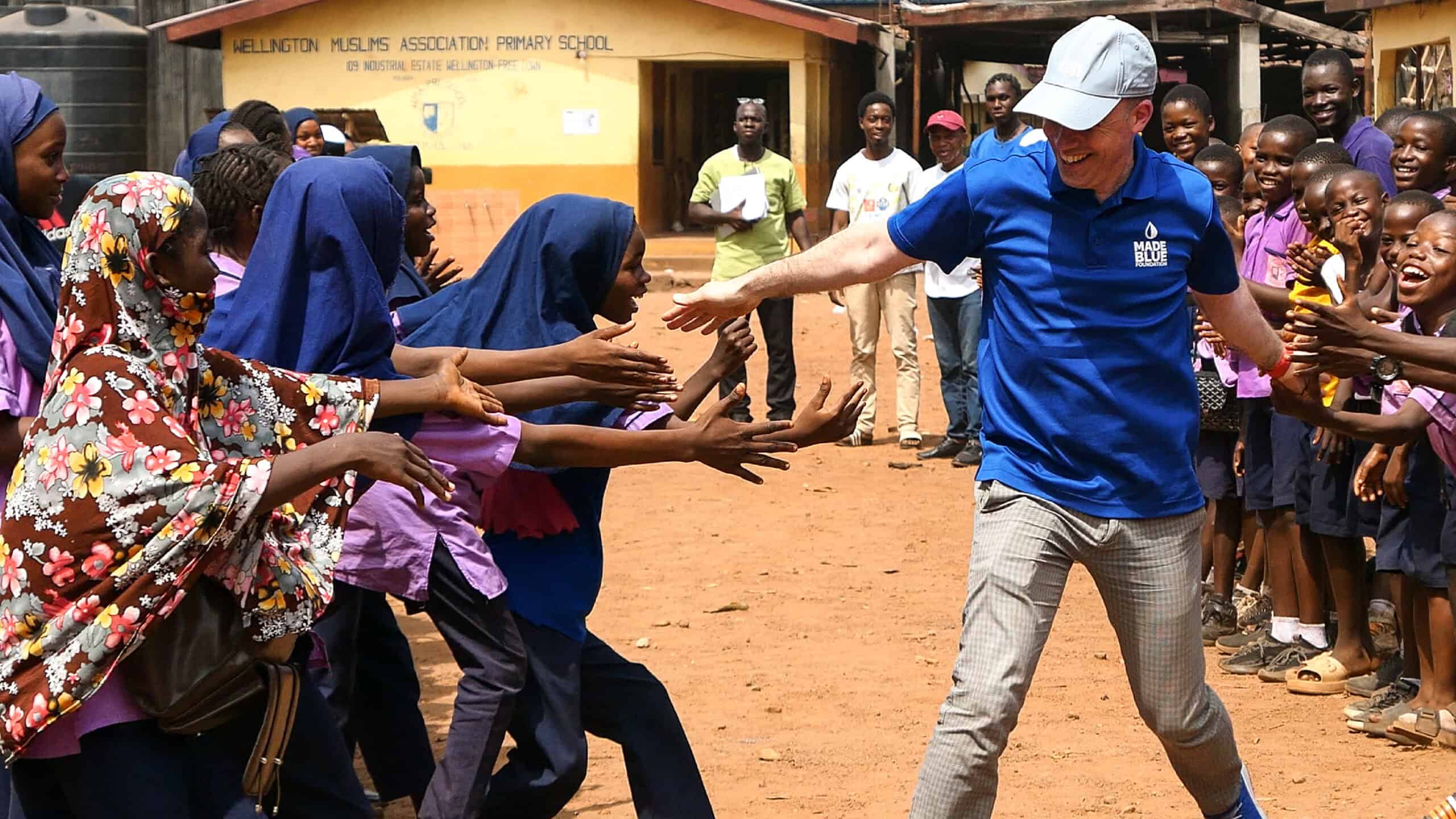
At WMA School, the impact of water shows up in the small, everyday moments students describe themselves:
Before the borehole was installed, access to water was limited and often came at a cost. “Before, we had to leave the school to go and buy water. We didn’t always have enough, so we couldn’t wash our hands after using the toilet. It wasn’t healthy.”
With only a handful of toilets lacking sufficient water for thousands of students, hygiene was difficult to maintain. “Just imagine a school of 2,000 students with only four bathrooms. Sometimes hundreds of children had to share one. It caused many problems.”
Today, that situation has changed. The difference goes beyond convenience. It directly affects health, attendance, and the ability to learn.
“
We don’t have to leave class to search for water anymore. These facilities have really changed the lives of our school and the community. Thank you!
Student, WMA school, Freetown, Sierra Leone
”
Milk powder for school meals
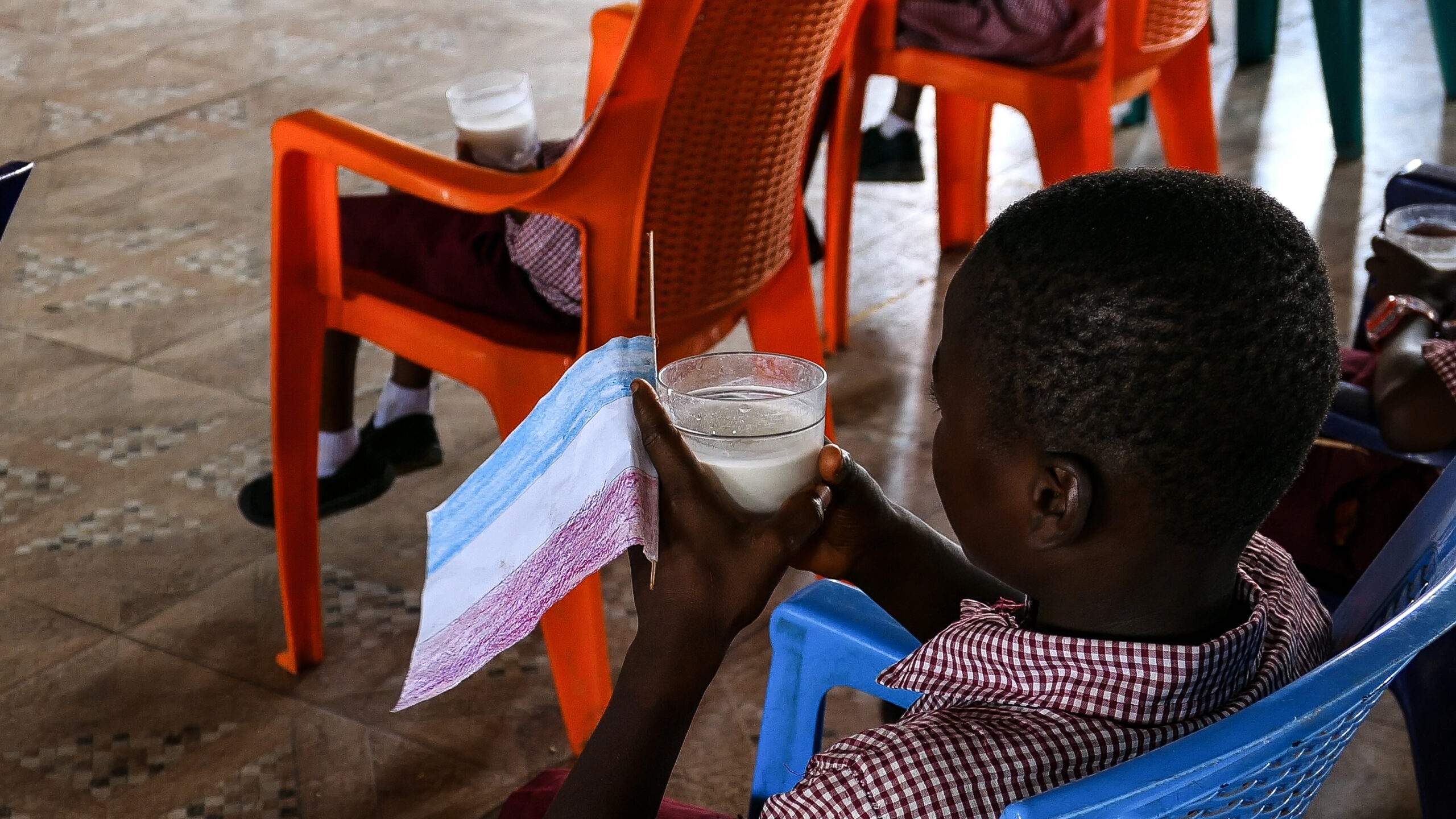
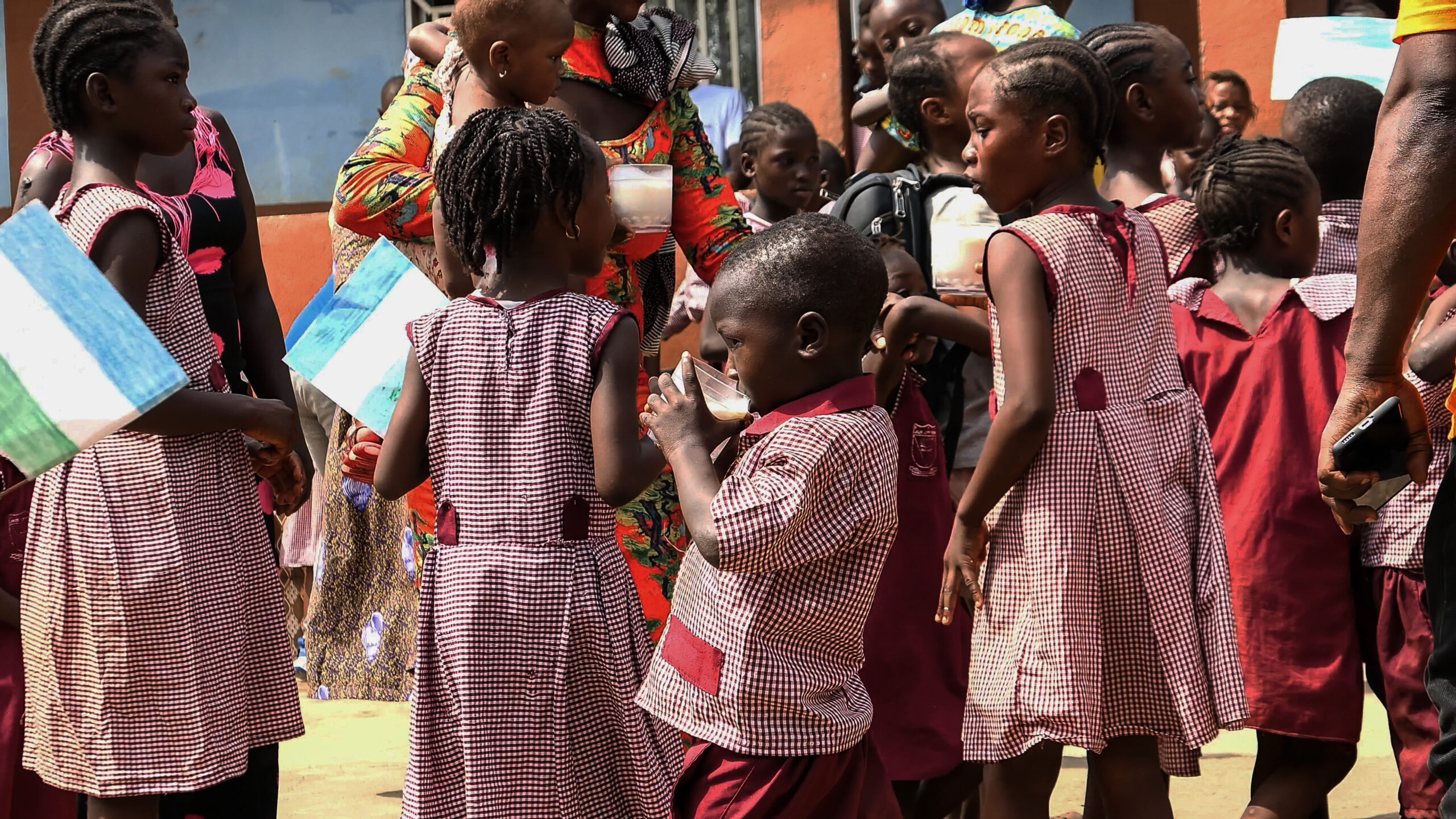
In Freetown, our focus isn’t only on water but also on nutrition, thanks to the additional support of Made Blue ambassadors Hoogwegt and Vreugdenhil Dairy Foods. At REC Primary School in Upper Jui, we saw what that means for students.
Through Sierra Leone’s national school feeding programme, students receive one meal a day. It’s essential for school attendance but in practice, that meal often consists of rice and beans. Filling, but lacking key nutrients such as calcium.
With support from Hoogwegt and Vreugdenhil Dairy Foods, milk powder is added to the meals. This improves nutritional value and helps children concentrate better in class. It’s a simple intervention, but according to teachers the impact is immediately visible: more energy, better focus, and more active participation.
Water and nutrition reinforce each other
What stood out during our visit is how closely these two elements are connected. Water supports hygiene and health. Nutrition provides energy and focus. Together, they shape what a school day looks like, and what children are able to get out of it.
Where students once spent time collecting water, they can now focus on their lessons. And where a meal used to be mainly filling, it now also supports growth and development. These are not complex interventions. It’s a straightforward combination that makes visible extra impact.
From a water point in a busy neighbourhood to a glass of milk in a classroom, progress is found in the details of everyday life. What may seem ordinary to us determines whether a child stays healthy, can attend school, and has the opportunity to move forward.
Freetown WASH & Milk
In Sierra Leone, we build and improve water systems for schools and markets in the poorest areas of Freetown. At schools, we take an extra step — with the help of dedicated Made Blue ambassadors — by addressing calcium deficiency among students.
Want to learn more about our water projects?
rom households in Bangladesh and Nepal to schools in remote villages in Ethiopia — every Made Blue water project brings us one step closer to sustainable access to clean drinking water for all.
Learn more about our projects and the impact we’re making together:
Malawi: Madzi for Malawi
In Malawi, more than 7 million people lack clean water. We are going to change this by building and repairing water points.
Read moreSierra Leone: Water for a good start in life
We are helping young and expectant mothers and their children live healthy and safe lives by investing in health center facilities in Sierra Leone.
Read moreUganda: Wash, Learn & Share
In this follow-up of our WASH & Learn project in Uganda, we place an even greater emphasis on capacity building and sustainability, with a central role for entrepreneurs, women and girls.
Read moreBangladesh: Mini grids for households
In Bangladesh, mini water networks will provide 33,670 people with direct access to clean drinking water.
Read moreSierra Leone: Water and nutrition at schools
With 7 water kiosks and the provision of milk powder for school meals, we help more than 55,000 people to a better future.
Read moreFinancing for WASH entrepreneurs
One in four rural water points in Africa is out of service, often because there is no viable business model for repair and maintenance. We want to change that.
Read moreDraag bij aan Schoon drinkwater
met jouw organisatie
Wij zijn de Made Blue Foundation.
Onze missie: schoon drinkwater voor iedereen.
Help jij mee om onze missie te bereiken?
Dat kan op meer manieren dan je denkt.