Margaret’s story
Since our latest update from Malawi, a total of 70 water points have been rehabilitated, serving more than 26.000 people. Margaret George, a mother of six from a village in Machinga District, shares what this means for her and her family.
Update: 12 Nov 2026
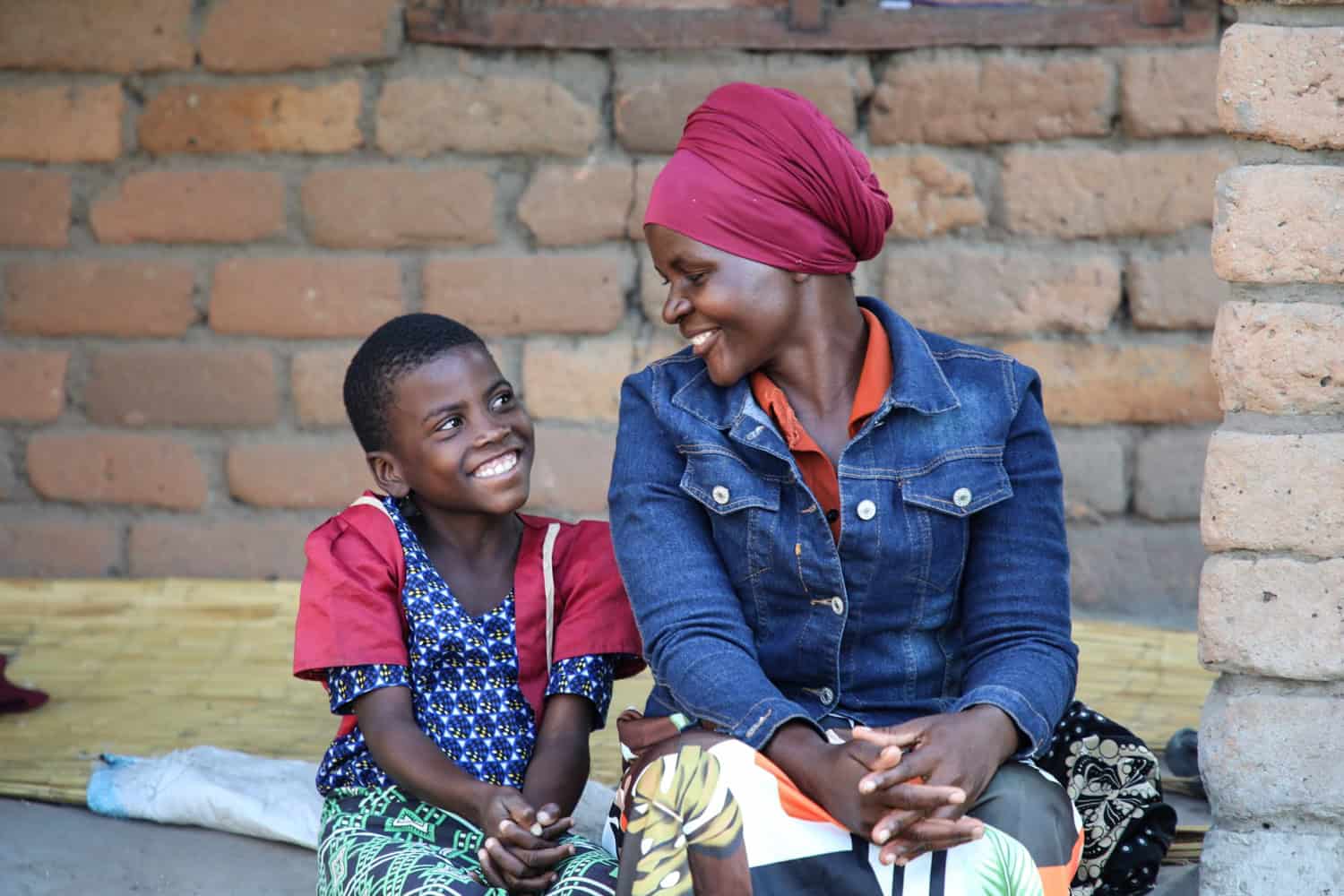
Early mornings, Long walks and missed income
For Margaret George, fetching water for her family once meant that her day began at four in the morning. The mother of six used to get up early to collect water for drinking, cooking and washing.
This had a direct effect on her families’ income. “We couldn’t go to the fields because so much of our time was spent searching for water.”
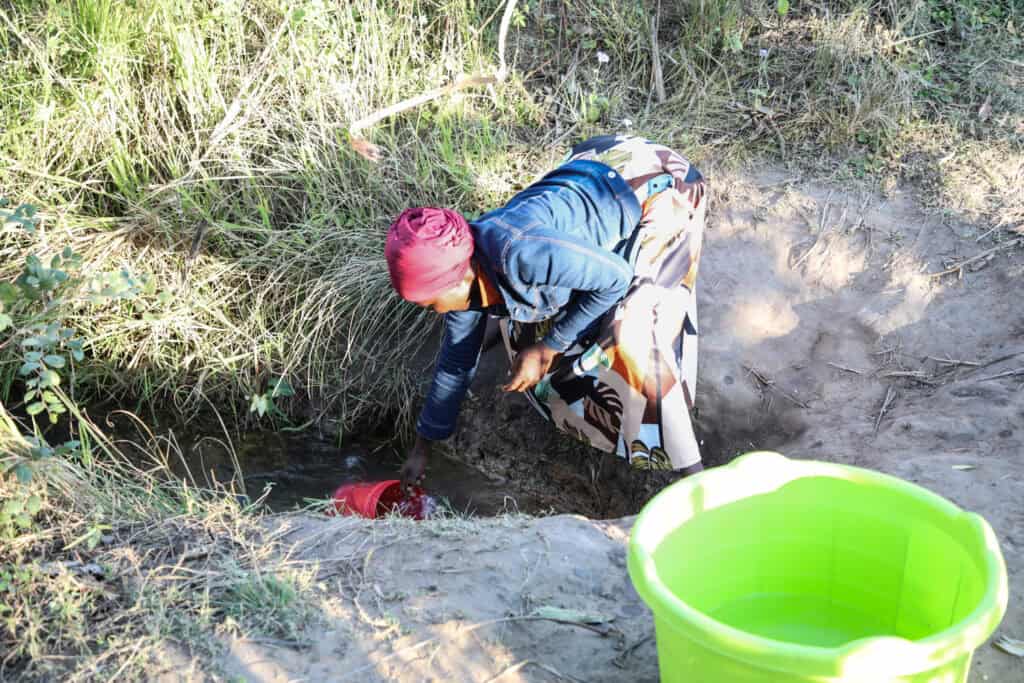
Beyond the early mornings, long walks and missed income, Margaret worried about what the water her family depended on might mean for their health. “We had to fetch water from dirty wells, sometimes mixed with rainwater,” she recalls.
“
We had to fetch water from dirty wells, sometimes mixed with rainwater.
— Margaret George, community member
“
Illness caused by unsafe water
That worry became reality when her eight-year-old daughter, Anita, fell ill and had to be admitted to Chikwewo Health Centre. Margaret remembers health workers explaining Anita’s illness was caused by drinking unsafe water, the same water the family relied on every day for drinking and cooking. “As a mother, that made me very sad,” she says.
Diarrhoea is one of the most common illnesses in communities without access to safe water, and it hits children hardest. It leaves them weak and dehydrated, and recovery can take time, affecting the whole family: a parent has to stay home to care for a sick child.
For Anita, being ill also meant missing school. Today, life looks very different for the family.
“
It takes less than five minutes to get to the water point, I don’t have to get up as early as I used to.
— Margaret George, community member
“
Safe water, close to home
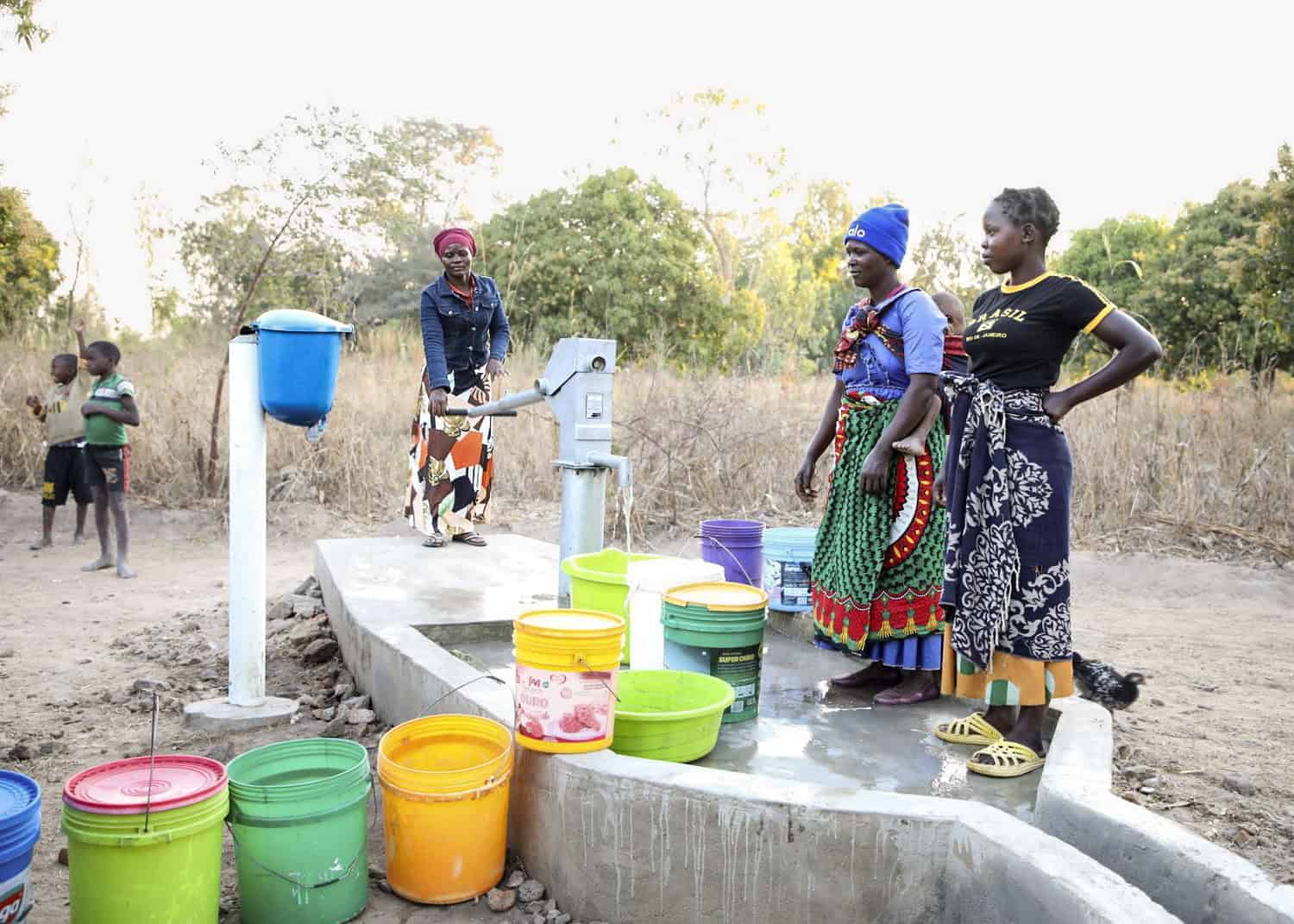
A water point built close to Margaret’s home has completely changed the way the family gets its water. What once meant getting up at four o’clock and walking a long way now takes just a few minutes.
For Margaret, this makes a big difference. The shorter distance gives her more time for her family, and the reassurance that a reliable source of safe drinking water is always close by.
At the water point, she meets other women from the village that come to collect water for their households. Fetching water is still part of daily life, but the long walks and hours spent searching for water are no longer necessary.
“
This borehole has brought us a better life, and our families are happier.
— Margaret George, community member
“
Healthy and Back in school
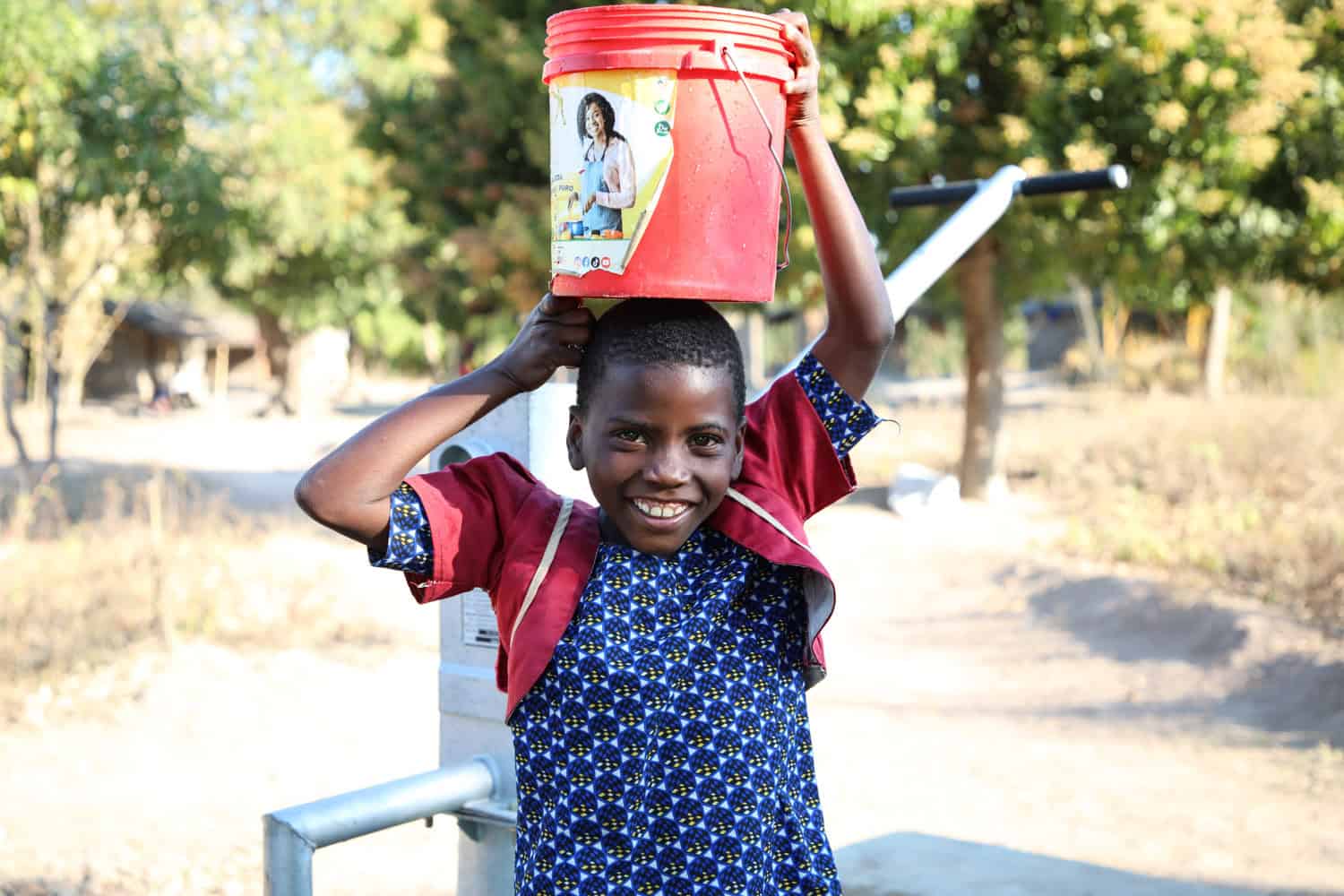
For Anita, better access to water also means growing up in a healthier environment where she can develop and learn. When she was ill with diarrhoea, she couldn’t go to school. Now the eight-year-old is back in class and doing well – she is one of the top pupils in her class. She even knows what she wants to be when she grows up: a teacher.
Her story shows how something as seemingly simple as access to water has effects that reach far beyond the household. Illnesses caused by contaminated water can keep children out of school for days at a time. On top of that, the daily search for water costs families a great deal of precious time.
Clean water for all
When we’re thirsty, all we need to do is turn open a tap. It’s such a simple act that we don’t even think about it anymore. For people like Margaret and Anita, it’s a very different story.
In Malawi, 5.8 million people still don’t have access to clean drinking water. Some of them have to walk for hours each day, to fetch polluted water. Made Blue Foundation wants to change that.
Want to know more about
our water projects?
From households in Bangladesh to villages in Nepal and remote schools in Ethiopia — every Made Blue project brings sustainable clean drinking water closer to reality.
Learn about our projects and the impact we’re making together:
Financing for WASH entrepreneurs
One in four rural water points in Africa is out of service, often because there is no viable business model for repair and maintenance. We want to change that.
Read moreMalawi: Madzi for Malawi
In Malawi, more than 5.8 million people lack access to clean water. We’re helping to change this by building and repairing water points.
Read moreBangladesh: Mini grids for households
In Bangladesh, mini water networks will provide 33,670 people with direct access to clean drinking water.
Read moreUganda: Wash, Learn & Share
In this follow-up of our WASH & Learn project in Uganda, we place an even greater emphasis on capacity building and sustainability, with a central role for entrepreneurs, women and girls.
Read moreSierra Leone: Water and nutrition at schools
With 7 water kiosks and the provision of milk powder for school meals, we help more than 55,000 people to a better future.
Read moreSierra Leone: Water for a good start in life
We are helping young and expectant mothers and their children live healthy and safe lives by investing in health center facilities in Sierra Leone.
Read moreContribute to Clean Drinking Water
with your organization
We are the Made Blue Foundation.
Our mission: clean drinking water for all.
Want to help make it happen?