5 Made Blue ambassadors putting water stewardship into practice
5 Made Blue ambassadors putting water stewardship into practice
17 August 2026 — Reading time: 6 min
Water is becoming an increasingly scarce and valuable resource worldwide. For a growing number of organizations, managing water responsibly is no longer an ambition for the future, but a core part of their sustainability strategy.
Good water stewardship starts with your own sphere of influence: mapping water use within your organization and spply chains, using water more efficiently, and preventing waste to ease the pressure on local water sources.
Many organizations choose to go a step further. Alongside making their own activities more sustainable, they also contribute — through the Made Blue Foundation — to long-term access to clean drinking water for people in water-scarce regions.
In this article, we shine a spotlight on five Made Blue ambassadors who show what water stewardship can look like in practice. From the supply chain to their own operations: each one an inspiring example of organizations taking responsibility for water, both close to home and far away.
1. Vreugdenhil
Water is essential to the production of milk powder, for various parts of the production process. Vreugdenhil Dairy Foods therefore looks for ways to use water flows within its factories as efficiently as possible.
A good example is the reuse of condensate water. When making milk powder, water is evaporated out of the milk. This water is captured and put to use again. For example, to clean and rinse production lines, to supplement boiler water and for cooling purposes. In this way, Vreugdenhil minimizes its use of fresh drinking and groundwater. Water discharge is also handled carefully and in line with all permit conditions: Vreugdenhil discharges more water than it takes in, making it water positive.
Finally, Vreugdenhil closely monitors water use at all its production sites. Processes, water sources, and regulations differ from factory to factory, so each location is assessed individually for the best opportunities to save water and ease pressure on local water sources.
Impact in water-scarce regions through the Made Blue Foundation: For every litre of condensate water from fat-filled products destined for Africa, one litre of clean drinking water is made available through Made Blue Foundation’s water projects. In Sierra Leone, Vreugdenhil takes this one step further. Milk powder is a nutrient-rich product that can be distributed around the world. However, clean water is essential for its preparation. Contaminated water can cause illnesses such as diarrhoea and other intestinal infections, which can prevent the body from properly absorbing nutrients. This sparked the idea for a special partnership. By donating milk powder to schools where access to clean water has been provided through Made Blue, the initiative creates double impact: children have access to safe drinking water while also receiving essential additional nutrients.
2. ONE HUNDRED restrooms
Every visit to a public restroom requires water. At ONE HUNDRED restrooms, saving that water starts long before the first visitor walks in, through a combination of thoughtful design, smart technology, and efficient operations.
Water savings are, for example, built into every restroom from the design stage onward, with sensor-controlled taps, efficient flushing systems, and water-conscious cleaning methods.
As a result, an average visit to a ONE HUNDRED restroom uses about 6 liters of water per visitor, compared to an estimated 8 to 10 liters at a traditional public restroom — a water saving of up to 40% per visit.
But it doesn’t stop there. With smart water technology, ONE HUNDRED is also gaining increasing insight into the water use of individual toilets and sinks. That data helps uncover new savings opportunities and supports pilots to further optimize flushing systems and sanitary facilities, without compromising on hygiene, comfort, or the visitor experience.
Impact in water-scarce regions through the Made Blue Foundation: ONE HUNDRED restrooms gives guests the option to fill up on drinking water. For every new water tap installed, the company donates to the Made Blue Foundation. At some locations, guests can also buy Made Blue bottles and make an extra personal donation through the water taps.
3. MAAS
For MAAS, water stewardship doesn’t stop with its own operations. The company takes a broader view of the entire value chain: from the cultivation and processing of coffee to the water used by coffee machines on site.
Since the majority of its water impact occurs during the production of coffee, tea and cocoa, MAAS works with suppliers that meet certification standards such as Rainforest Alliance, Fairtrade and the EU Organic label. These certifications include requirements relating to responsible water use, wastewater management and the protection of local water sources.
MAAS also aims to make its entire coffee value chain more sustainable. A good example can be found in Ethiopia, where MAAS, through its BLENDSTAR Single Origin coffee, has become part of a GIZ project. As part of this project, a new environmentally friendly wet mill was completed in Kaffa in 2025. The new processing facility significantly reduces water use, saving 20% of the water used in coffee processing. In concrete terms, the new wet mill uses just 80% of the water required by a conventional washing process.
Impact in water-scarce regions through the Made Blue Foundation: For every litre of coffee, tea or water served to customers using a MAAS coffee machine, MAAS donates the cost of providing one litre of clean drinking water through Made Blue projects in water scarce areas. This way, every drink helps provide someone else with clean water too.
4. BLYCOLIN
Water is essential to Blycolin’s linen service. That’s why the company takes a critical look at how much water its laundries use and where savings are possible. By measuring water use per kilogram of laundry, optimizing washing processes, and investing in more efficient machines and technology, it is working step by step toward lower water consumption. Partner laundries are involved in this effort too, through shared data collection, performance comparisons, and the exchange of knowledge and experience.
That approach delivers measurable results. Average water use at Blycolin’s own laundries dropped from 4.94 liters per kilogram of laundry in 2023 to 4.60 liters in 2025, a decrease of roughly 7%. At its Kolham site alone, usage fell from 4.09 to 3.50 liters per kilogram between 2024 and 2025, partly thanks to improvements to the water management system.
Blycolin also looks beyond simply using as few liters as possible. Water savings need to stay in balance with hygiene, textile quality, and the lifespan of the linen. Through life cycle assessments, the company is also building an increasingly clear picture of the impact of material choices and textile production. In this way, water isn’t treated as a standalone issue, but as part of the impact of the entire linen supply chain.
Impact in water-scarce regions through the Made Blue Foundation: For every change of bedding in every hotel room, Blycolin mirrors that in clean drinking water through Made Blue water projects.
5. vandeStreek Bier
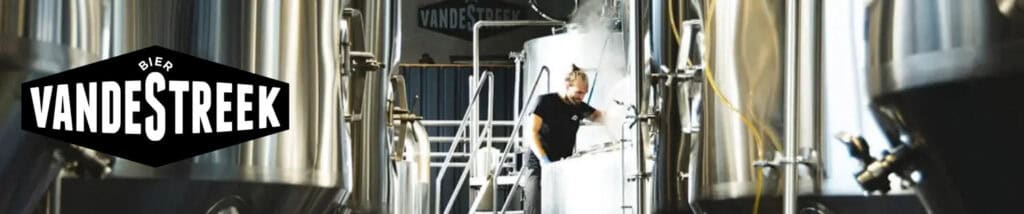
Water is essential to brewing beer. It’s not just a key ingredient — it’s also used for mashing, rinsing, cooling, and cleaning, among other things. vandeStreek Bier therefore aims to use this water as efficiently as possible and reuse it wherever it can.
The water used to cool the beer, for instance, is captured and reused for mashing and rinsing the next batch. An extra-large cooler also means the beer can be cooled back down in about half an hour, making the process more efficient. Any warm water left over afterward is used to clean the brewery.
According to vandeStreek, this means the brewery uses 20% less water than most (craft) breweries — a great example of water stewardship in practice: smartly reusing water flows and minimizing waste within the production process wherever possible.
Impact in waterschaarse gebieden via Made Blue Foundation: For every litre of beer bottled, one litre of clean drinking water is made available in Made Blue water projects.
From your own water use to broader impact
Five organisations from five sectors with one thing in common: they’ve started by looking at their own water use and take responsibility from there. That might mean making changes within their own operations, working with suppliers across the value chain, or both.
Whether it’s a wet mill in Ethiopia, sensor-controlled taps in a public restroom, reused condensate water in a milk powder factory, more efficient cooling in a brewery, or using less water for every kilogram of laundry, these examples show that there’s no single way to approach water stewardship.
What these ambassadors also have in common is that they go beyond reducing their own water impact. Through Made Blue Foundation, they link their water use to clean drinking water for people in areas where access to safe water is far from guaranteed. It’s a practical way to take responsibility for water beyond the boundaries of their own organisation.
Together, these five examples show that good water management can look very different from one sector to another. But for Made Blue and its ambassadors, it starts from the same idea: water is a basic human need, and something we all have a responsibility to use wisely.
More News
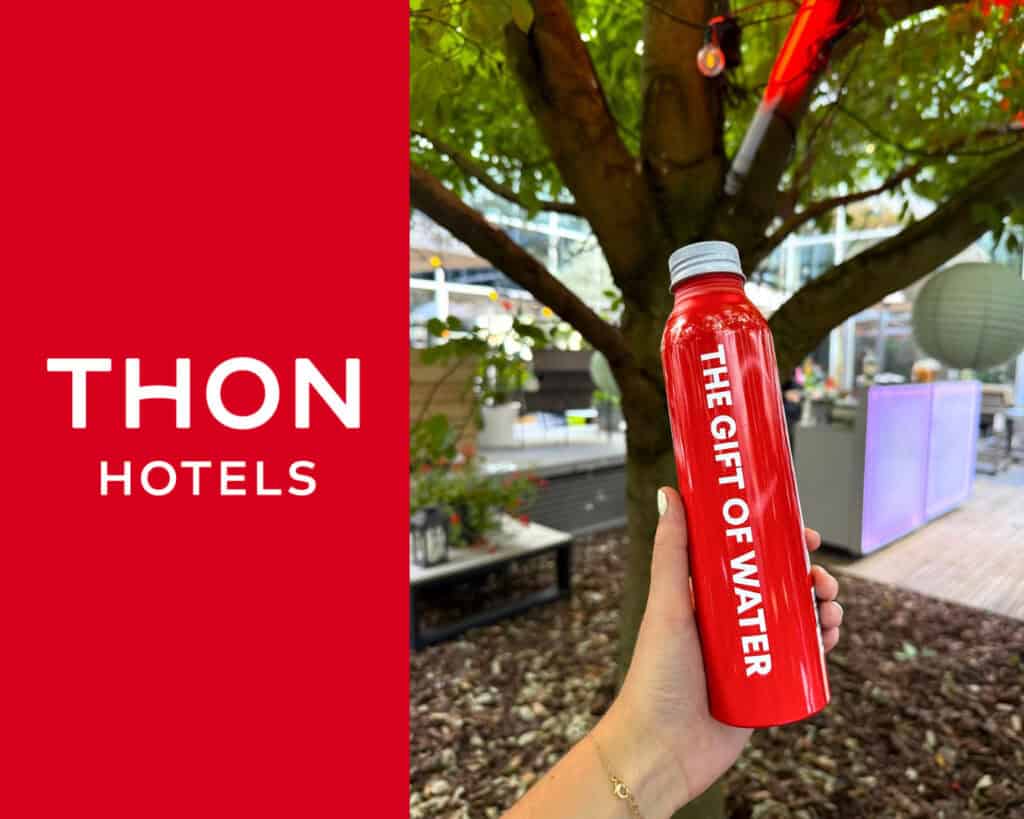
#PlasticFreeJuly – Thon Hotels introduces refills
Thon Hotels introduces reusable water bottles and refill stations in partnership with Made Blue during #PlasticFreeJuly.
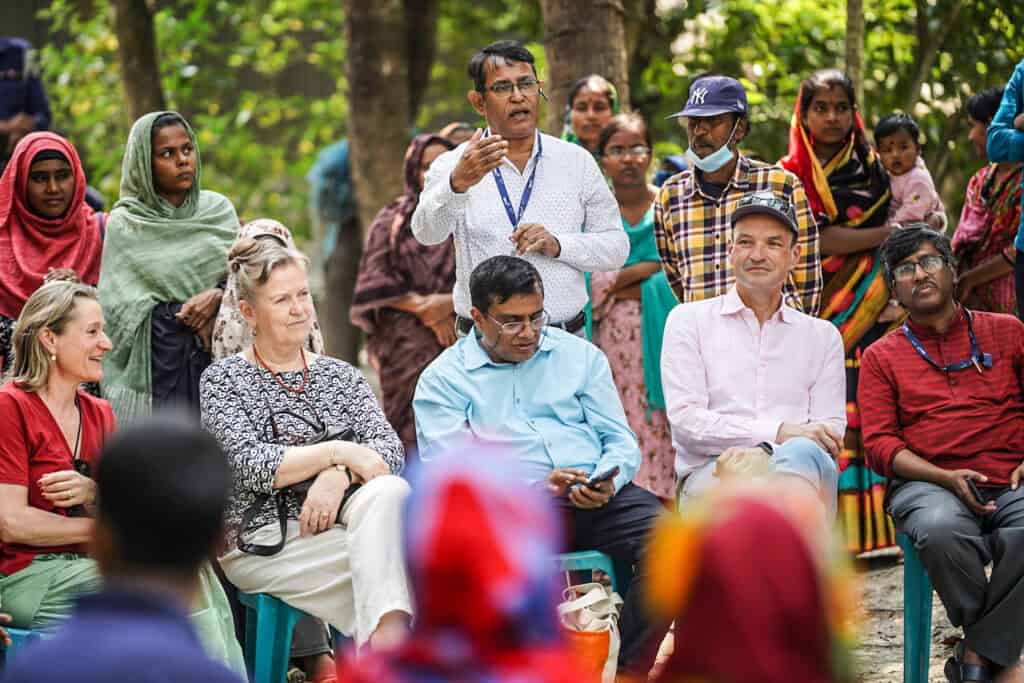
Building a water company in rural Bangladesh: the challenges
Leaks, electricity shortages, finding new customers and collecting payment. Can they make it work?
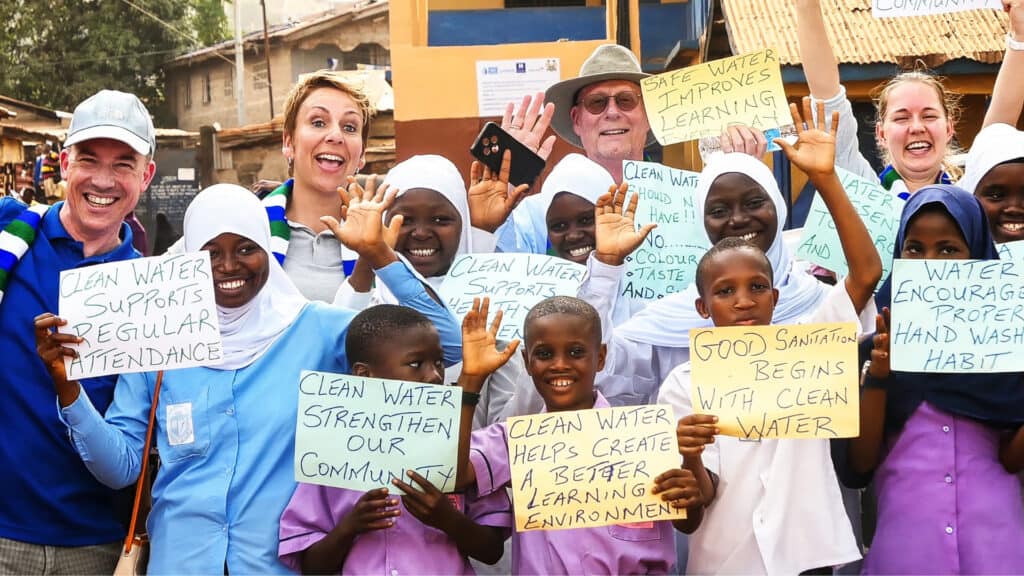
Freetown: Water, Sanitation & Hygiene at school
In April we visited Freetown, Sierra Leone together with Made Blue ambassadors Hoogwegt International and Vreugdenhil Dairy Foods.
Want to make clean water available for all?
Discover how your organisation can make impact in water scarce regions around the globe.
Made Blue water Projects
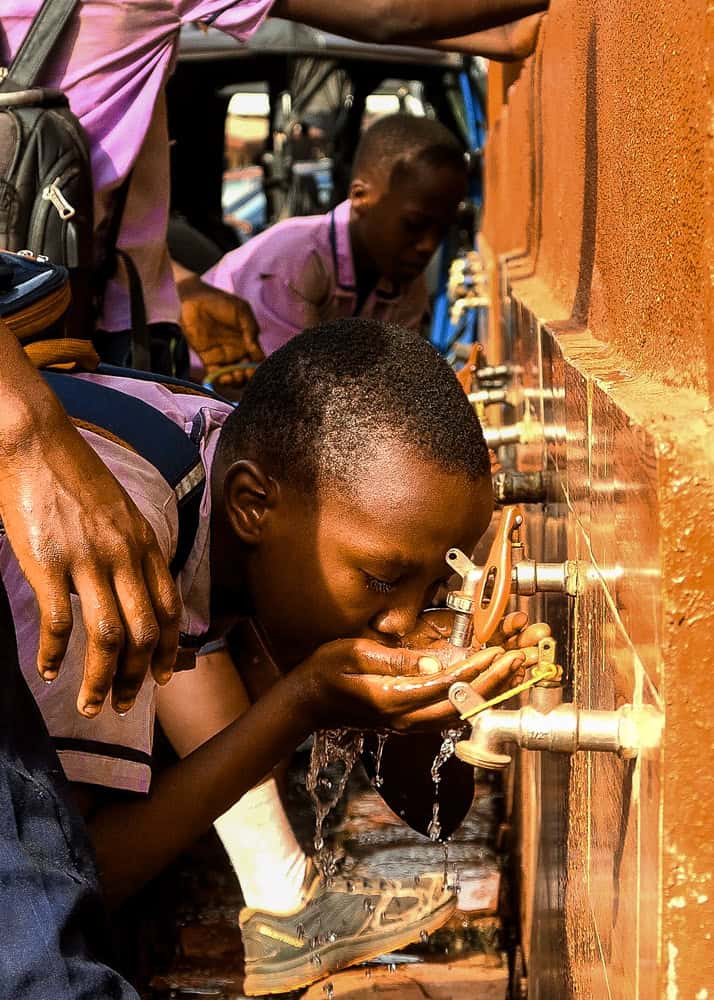
SIERRA LEONE: WATER AND NUTRITION AT SCHOOLS
With 7 water kiosks and the provision of milk powder for school meals, we help more than 55,000 people to a better future.
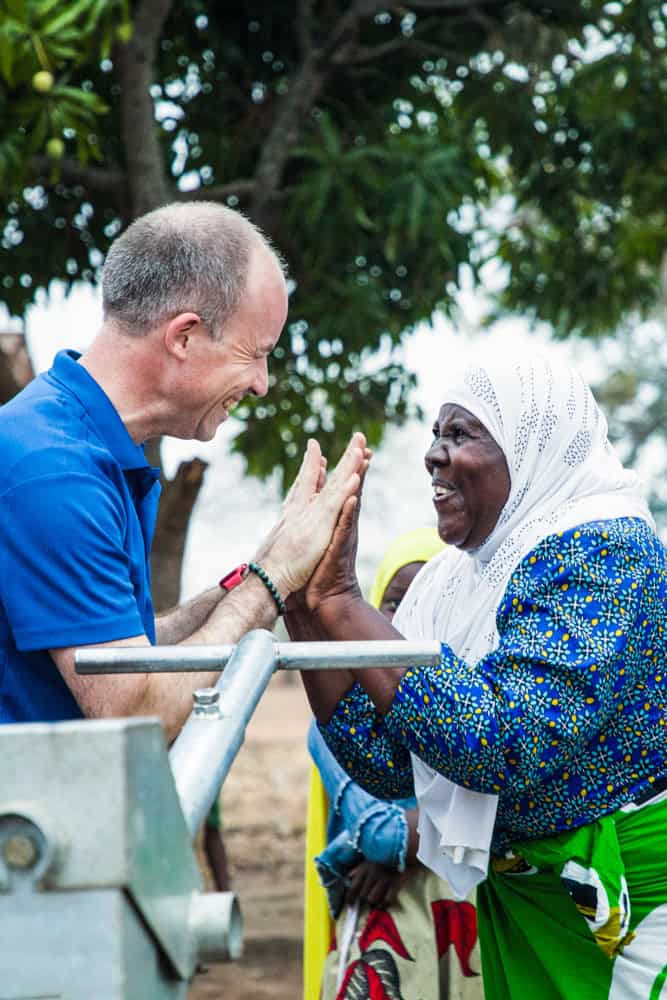
MALAWI: MADZI FOR MALAWI
In Malawi, more than 7 million people lack clean water. We are going to change this by building and repairing water points.
BANGLADESH: MINI GRIDS FOR HOUSEHOLDS
In Bangladesh, mini water networks will provide 33,670 people with direct access to clean drinking water.
Resources
Lorem ipsum dolor sit amet, consectetur adipiscing elit. Sed do eiusmod tempor incididunt ut labore et dolore magna aliqua. Ut enim ad minim veniam, quis nostrud exercitation ullamco laboris nisi ut aliquip ex ea commodo consequat.
MAKE impact with the water you use, save, sell or serve
We are the Made Blue Foundation.
Our mission: clean drinking water for all.
Want to help make it happen?
Want to know more about
our water projects?
From households in Bangladesh to villages in Nepal and remote schools in Ethiopia — every Made Blue project brings sustainable clean drinking water closer to reality.
Learn about our projects and the impact we’re making together:
Uganda: Wash, Learn & Share
In this follow-up of our WASH & Learn project in Uganda, we place an even greater emphasis on capacity building and sustainability, with a central role for entrepreneurs, women and girls.
Read moreBangladesh: Mini grids for households
In Bangladesh, mini water networks will provide 33,670 people with direct access to clean drinking water.
Read moreSierra Leone: Water and nutrition at schools
With 7 water kiosks and the provision of milk powder for school meals, we help more than 55,000 people to a better future.
Read moreSierra Leone: Water for a good start in life
We are helping young and expectant mothers and their children live healthy and safe lives by investing in health center facilities in Sierra Leone.
Read moreMalawi: Madzi for Malawi
In Malawi, more than 7 million people lack clean water. We are going to change this by building and repairing water points.
Read more