Baseline report reveals urgent WASH challenges in Uganda
A baseline assesment for the WASH, Learn and Share project reveals urgent challenges in water, sanitation and hygiene (WASH) across 18 schools and 36 communities in the districts of Bunyangabu and Kabarole.
Update: 14 september 2024
Measuring to make sense of WASH
The baseline assessment examined the accessibility and quality of WASH facilities in schools. It looked at access to safe water and toilets, WASH-related absenteeism, and whether schools have the resources to maintain their facilities sustainably.
To do this, the assessment used the JMP ladder and the 3-star approach, which indicate the level of water, sanitation and hygiene a school provides.
Finally, the baseline reviewed whether schools have financial plans in place to ensure the long-term operation of their WASH facilities.project.
JMP: Water at schools in Bunyangabu District
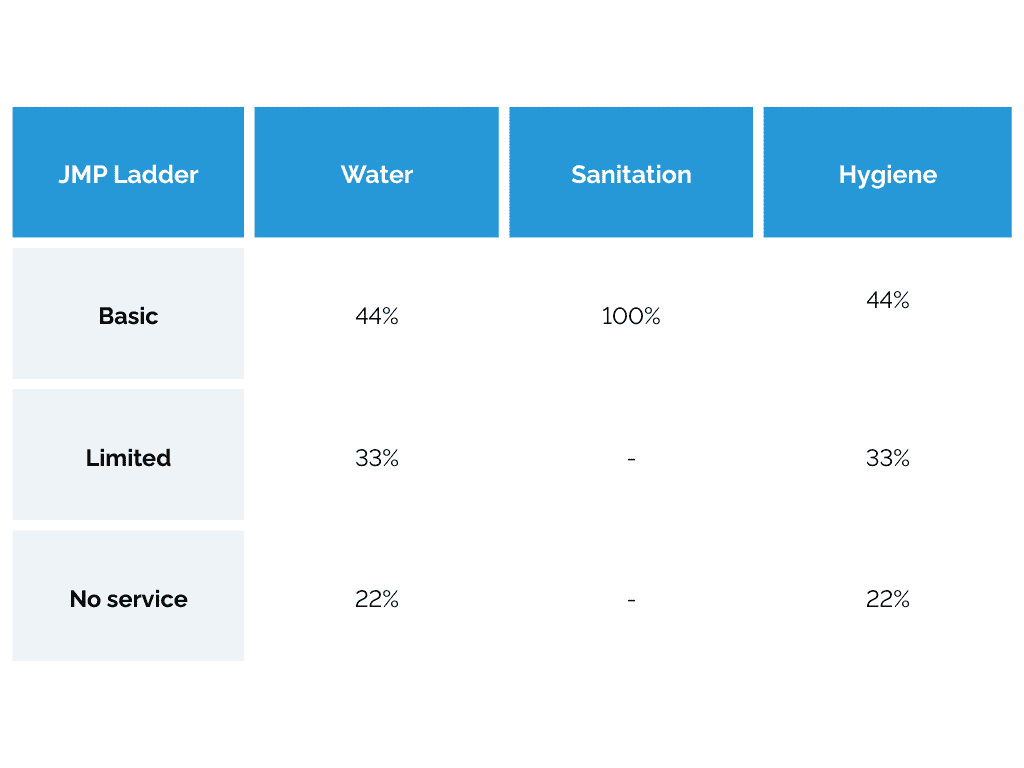
The JMP results for Bunyangabu show that only 44% of schools have basic access to water: drinking water from an improved source that was available during the survey. 33% have limited access, meaning there is an improved source but no water was available at the time of the assessment. 22% rely on an unimproved source or have no drinking water facility at all.
All schools (100%) have basic sanitation, with functional, private and gender-segregated toilets. Hygiene , however, lags behind: only 44% of schools have a hand washing point with water and soap, 33% have only water and 22% have no hand washing facility at all, increasing health risks significantly.
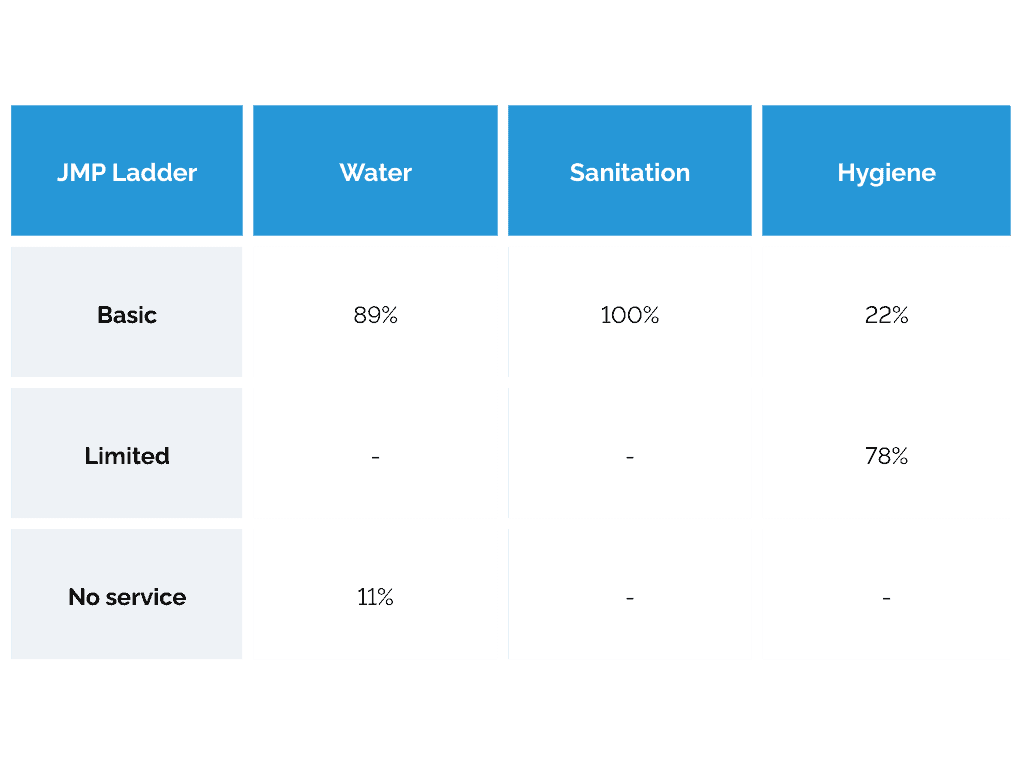
JMP: Water at schools in Kabarole District
In the coming months, the project will first focus on completing a baseline survey to accurately map the starting situation of all schools and communities. These results form the foundation for the next step: the start of implementation at six schools and in twelve surrounding communities.
In parallel, all partners are working together on a comprehensive implementation plan, detailing how effective communication, fundraising for maintenance, and a strong learning agenda will be ensured throughout the project. This agenda will support all stakeholders in jointly improving the WASH facilities.
Results of the 3-star approach
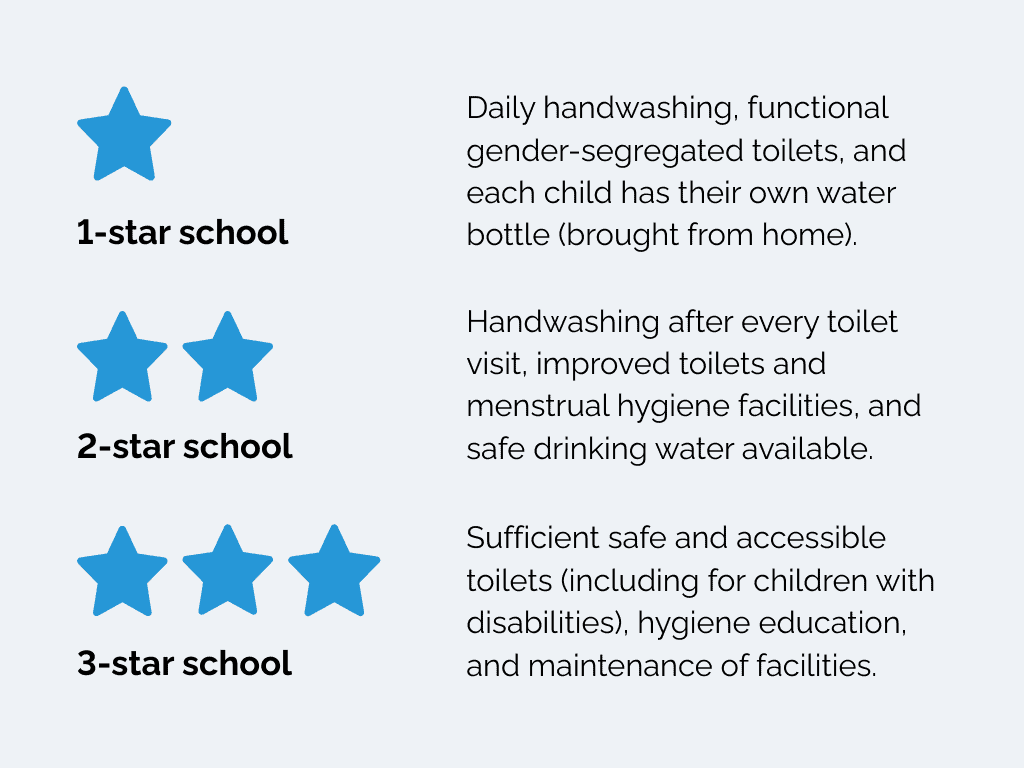
While the JMP measures the availability of facilities, the 3-Star Approach looks at daily routines, school management and education.
Bunyangabu: 22% of schools achieve only 1 star for water, meaning students must bring water from home. School score even lower for sanitation: 100% remain at the lowest level, lacking adequate toilets or menstrual hygiene facilities. For hygiene, 56% of schools score only 1 star, with insufficient handwashing points and routines.
Kabarole: None of the schools achieve 3 stars for water. All schools (100%) remain at the lowest sanitation level, without menstrual hygiene facilities or accessibility for children with disabilities. For hygiene, 78% of schools receive just 1 star, due to lack of soap and insufficient handwashing stations.
WASH challenges and school absenteeism
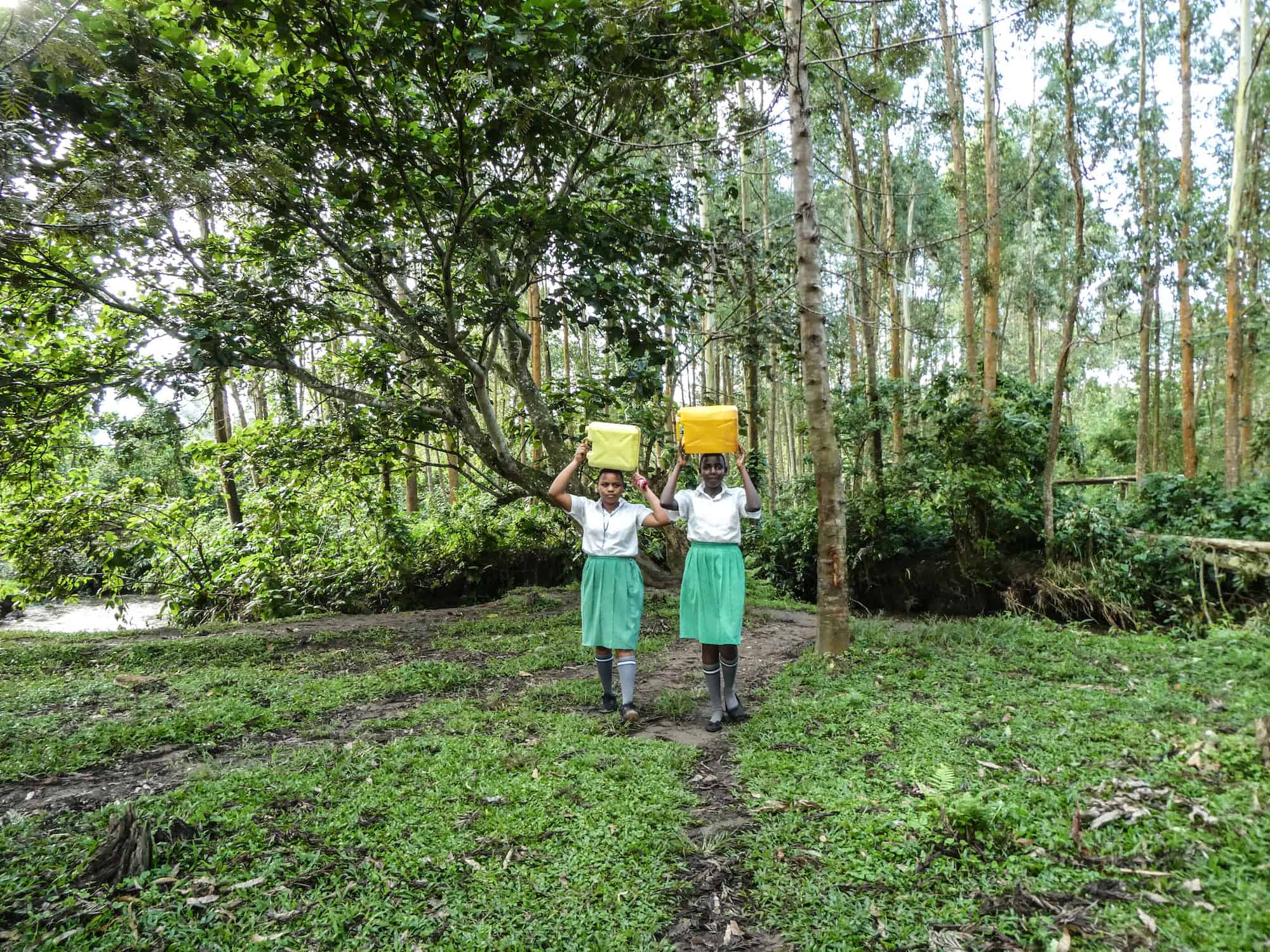
The baseline assessment shows that WASH problems have a major impact on student attendance, particularly for girls.
In Bunyangabu, 42% of the 297 students surveyed missed school due to WASH-related illnesses such as diarrhoea and infections, amounting to 715 lost school days in just three months. In addition, 23% of girls stayed home because of the lack of menstrual hygiene facilities, resulting in another 193 school days missed.
In Kabarole, 19% of the 266 surveyed students reported missing school due to WASH-related illnesses, accounting for 195 lost school days. Only 3% of girls stayed home because of menstruation, but still 21% of all students missed at least one day due to WASH-related causes.
Missing plans for Maintenance
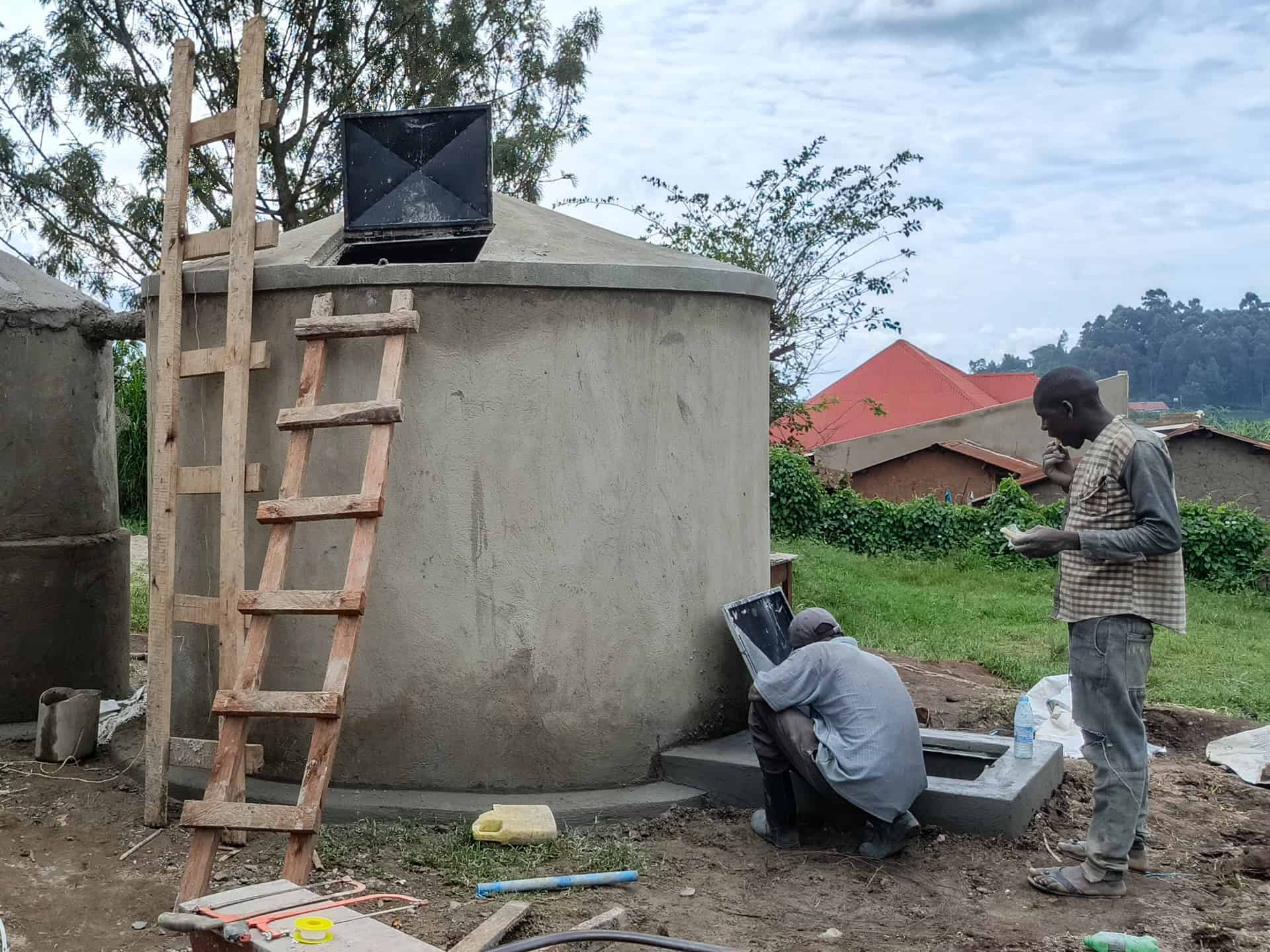
The baseline assessment also shows that none of the schools in either Bunyangabu or Kabarole have a financial maintenance plan in place for managing and maintaining their WASH facilities. As a result, 0% of the necessary funds are currently being generated to sustain these facilities over time.
The absence of such a plan poses a clear risk: without a system for collecting resources, such as small contributions, local donations or community support, schools cannot properly maintain their water points, toilets and hand washing stations. This undermines the sustainability of WASH facilities and leads to the deterioration of existing infrastructure.
The baseline report clearly shows that schools in Bunyangabu and Kabarole face significant WASH challenges. Although basic facilities are often present, the quality and reliability of water, sanitation and hygiene services fall far short, with major consequences for student health and attendance — especially for girls. Financial mechanisms to maintain these facilities are also lacking, leaving improvements fragile.
These insights highlight the need for targeted investments in safe drinking water, improved sanitation, menstrual hygiene and financial management. We look forward to seeing how, together with partners, communities and schools, the WASH, Learn & Share project will help improve these figures in the coming years.
Want to learn more about this project?
Want to know more about
our water projects?
From households in Bangladesh to villages in Nepal and remote schools in Ethiopia — every Made Blue project brings sustainable clean drinking water closer to reality.
Learn about our projects and the impact we’re making together:
Sierra Leone: Water for a good start in life
We are helping young and expectant mothers and their children live healthy and safe lives by investing in health center facilities in Sierra Leone.
Read moreMalawi: Madzi for Malawi
In Malawi, more than 7 million people lack clean water. We are going to change this by building and repairing water points.
Read moreSierra Leone: Water and nutrition at schools
With 7 water kiosks and the provision of milk powder for school meals, we help more than 55,000 people to a better future.
Read moreUganda: Wash, Learn & Share
In this follow-up of our WASH & Learn project in Uganda, we place an even greater emphasis on capacity building and sustainability, with a central role for entrepreneurs, women and girls.
Read moreBangladesh: Mini grids for households
In Bangladesh, mini water networks will provide 33,670 people with direct access to clean drinking water.
Read moreContribute to Clean Drinking Water
with your organization
We are the Made Blue Foundation.
Our mission: clean drinking water for all.
Want to help make it happen?