Progress for clean water in Uganda
Access to clean water, sanitation and hygiene requires more than infrastructure alone. This is one of the key insights from the WASH, Learn & Share project, which is delivering clear results in Western Uganda in 2025.
To date, 12 of the 18 primary schools have received new water and sanitation facilities, improving access to safe WASH services, education and sustainable, long-term solutions for thousands of pupils and community members. Continue reading to discover what’s been achieved so far.
Update: 16 December 2025
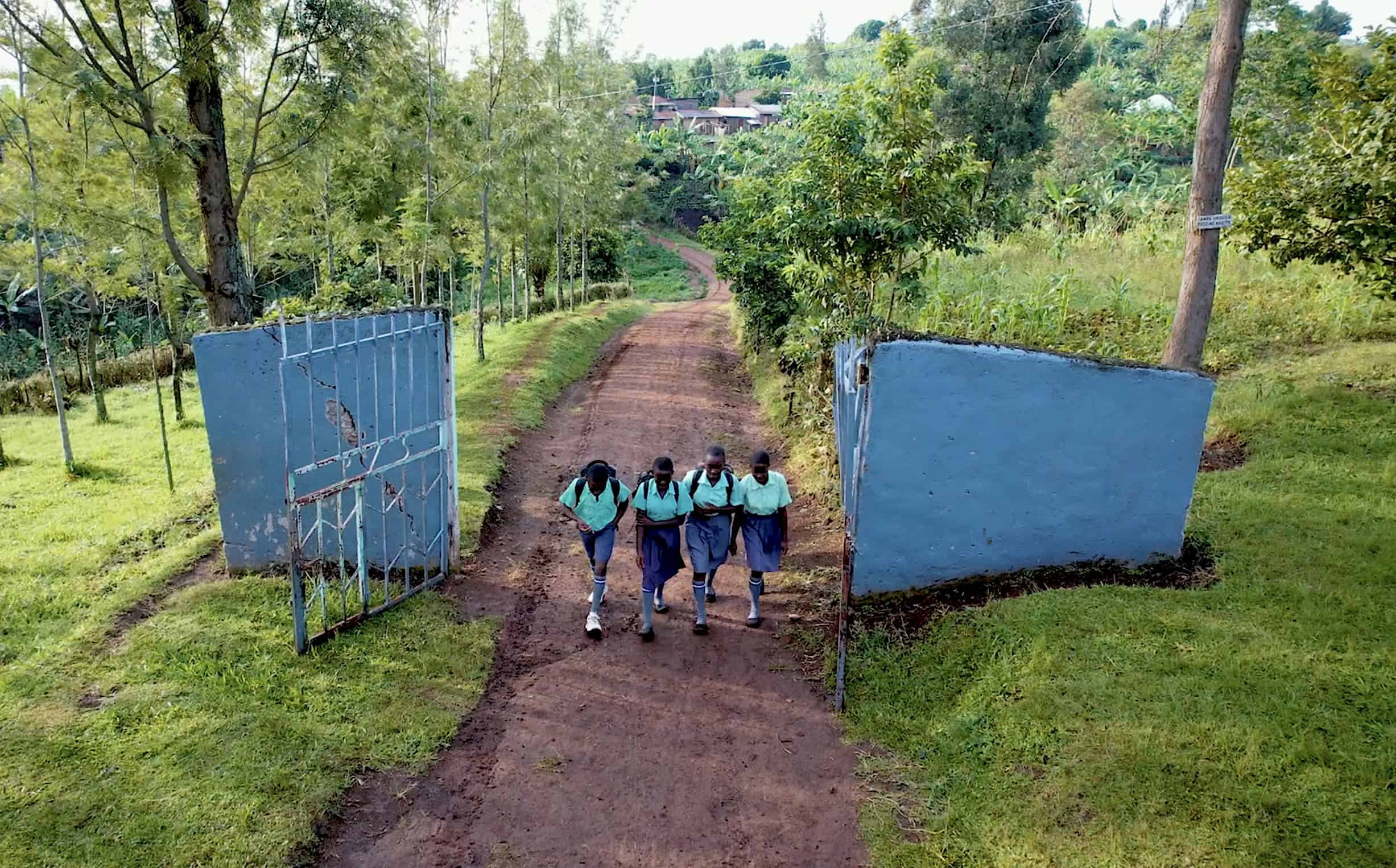
12 of 18 schools equipped with water systems
In 2025, the second year of the WASH, Learn & Share programme, work was carried out at another six primary schools in Bunyangabu and Kabarole. As a result, 12 of the 18 schools are now equipped with improved WASH facilities.
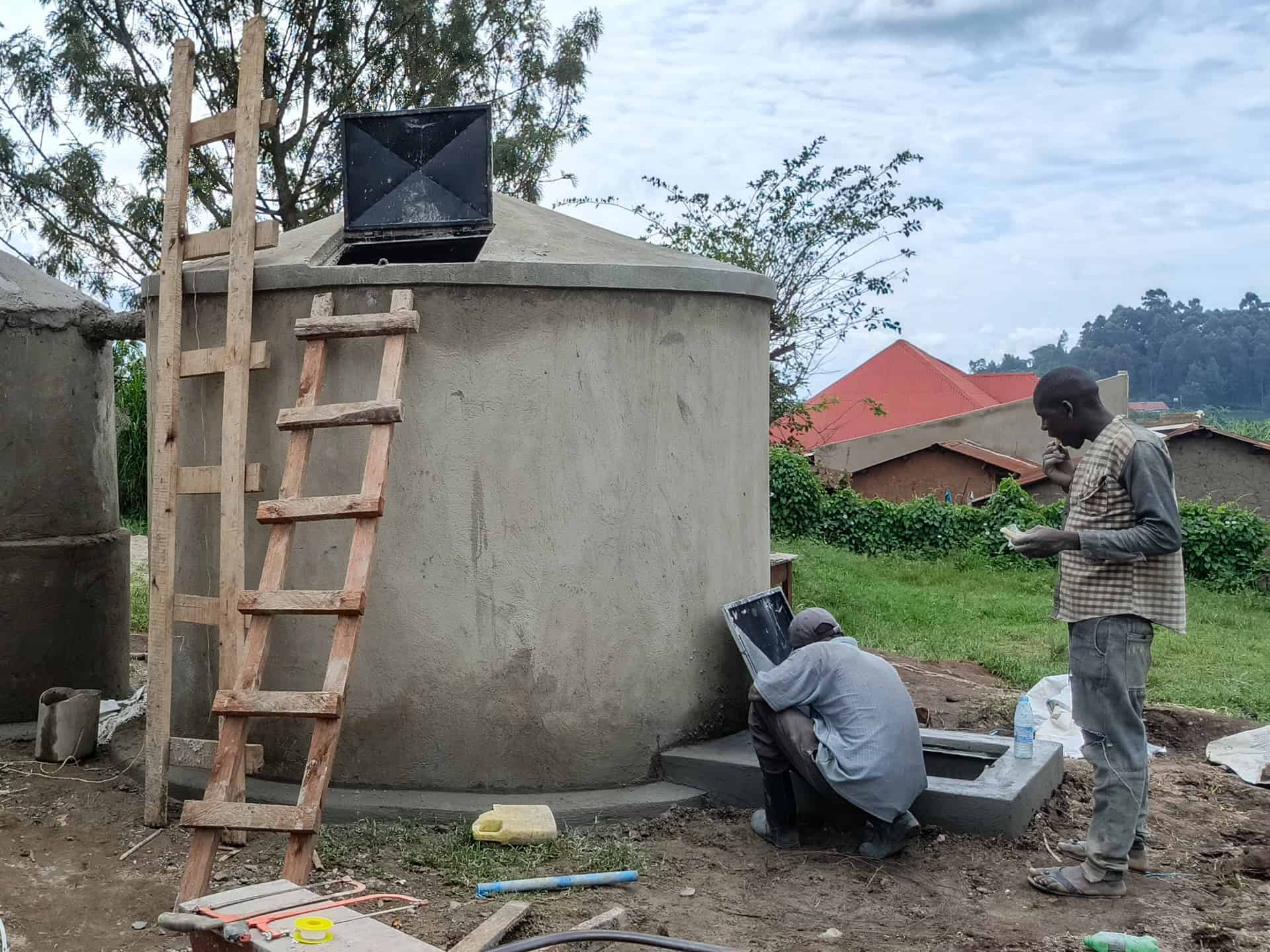
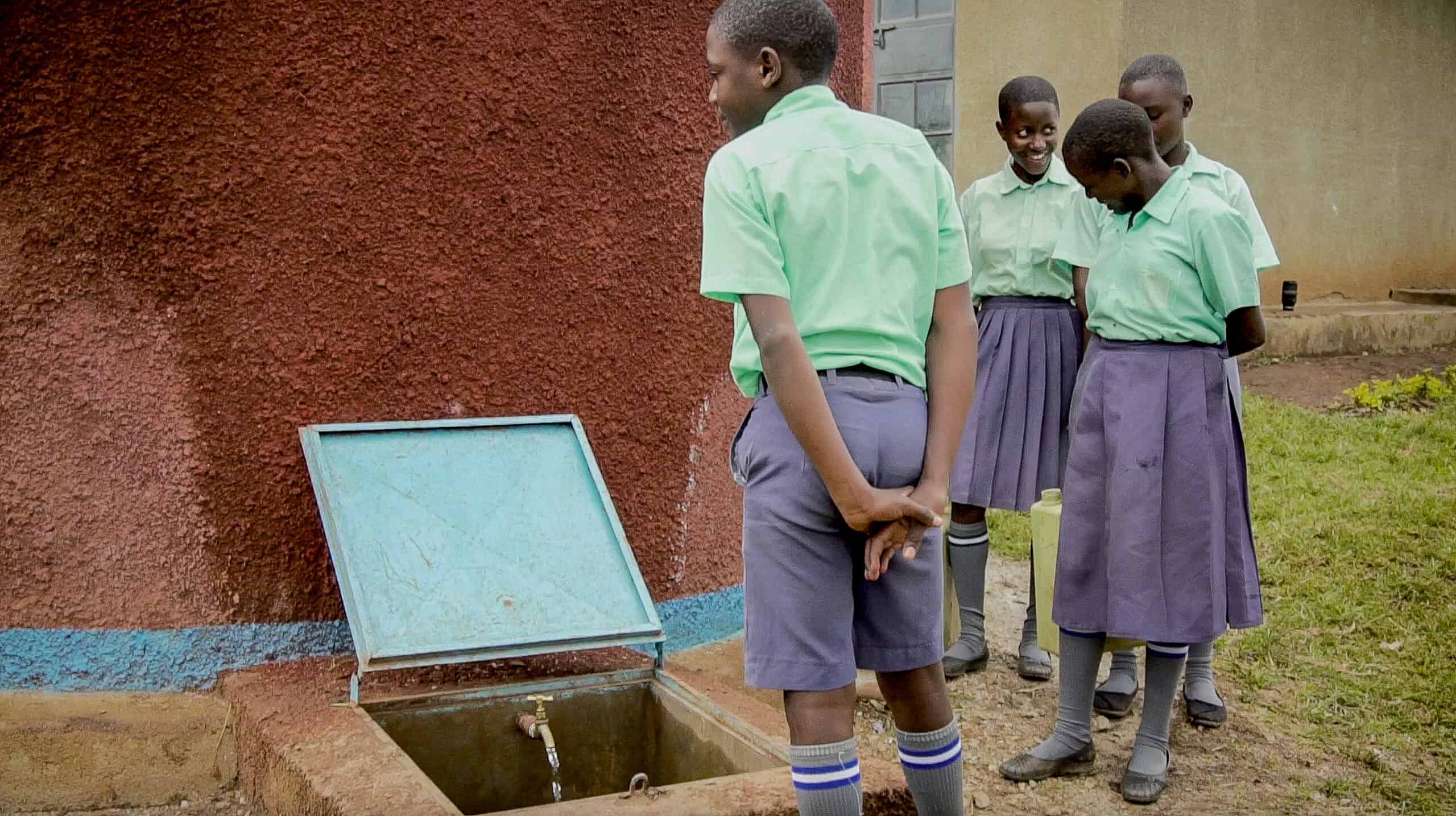
New water infrastructure was installed, including rainwater harvesting tanks with a capacity of 10 to 15 m³, fitted with first-flush systems to improve water quality. These systems enable schools to store water during the rainy season for daily use. In addition, handwashing stations were constructed, supplied by water tanks of 250 to 500 litres.
In addition, each school now has a seperate toilet block for girls, including a dedicated WASH room and a facility for the safe disposal of menstrual waste. Schools were further supported in operation and maintenance, including through WASH clubs and cost recovery planning.
In total, 3,368 pupils at these six schools now benefit from improved water, sanitation and hygiene facilities.
WASH clubs: students make the difference
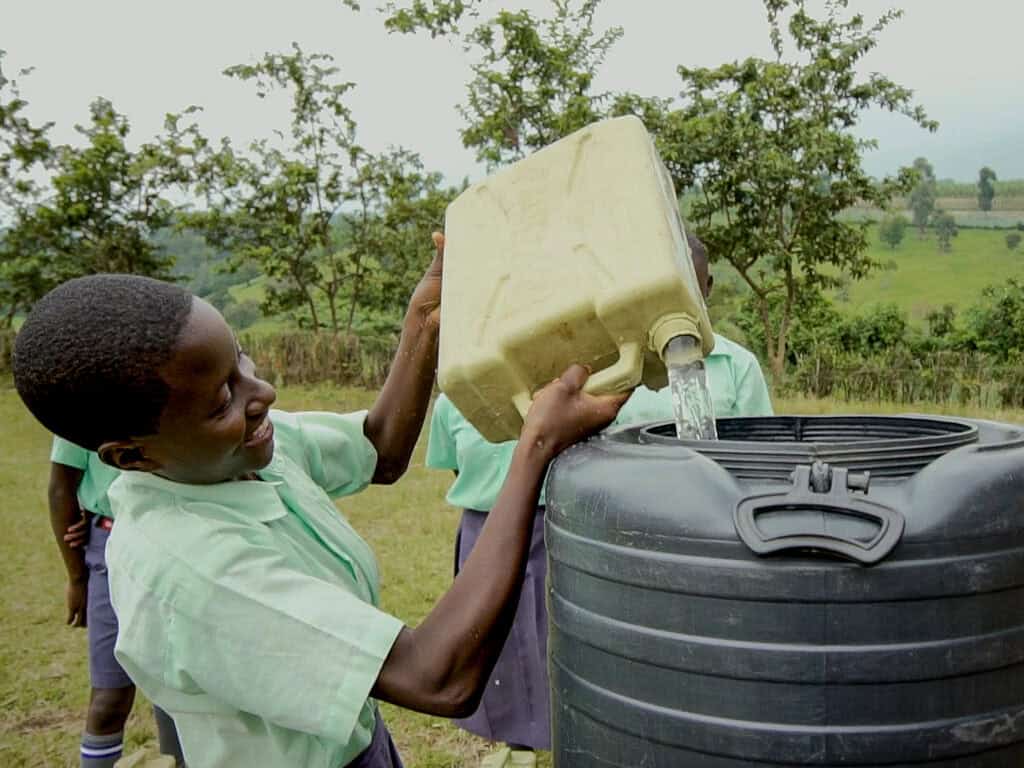
WASH clubs have been established at all participating schools, bringing together groups of pupils who actively promote clean water, hygiene and sanitation. They receive training on safe water use, hand-washing, toilet use and menstrual hygiene.
Club members help keep facilities clean and encourage their peers to adopt good hygiene practices, contributing every day to a healthier and safer learning environment. Beyond the school grounds, pupils also share their knowledge with parents and community members, during meetings and on the local radio.
This way, WASH clubs help ensure that new facilities are not only installed but also properly used and sustainably maintained.
Rehabilitation of six community water sources
Investment in physical water infrastructure also continued beyond the school grounds. In 2025, six existing community water sources were rehabilitated in collaboration with local governments, including protected springs and water wells that had been out of use for an extended period of time.
Through repair works and technical improvements, these sources were brought back into operation, restoring access to clean water for at least 3,596 people in surrounding communities.
At all rehabilitated water points, members of local water committees were trained in technical management, maintenance and organisation, helping to ensure that the systems remain functional over time.
Linking water infrastructure to sustainable management
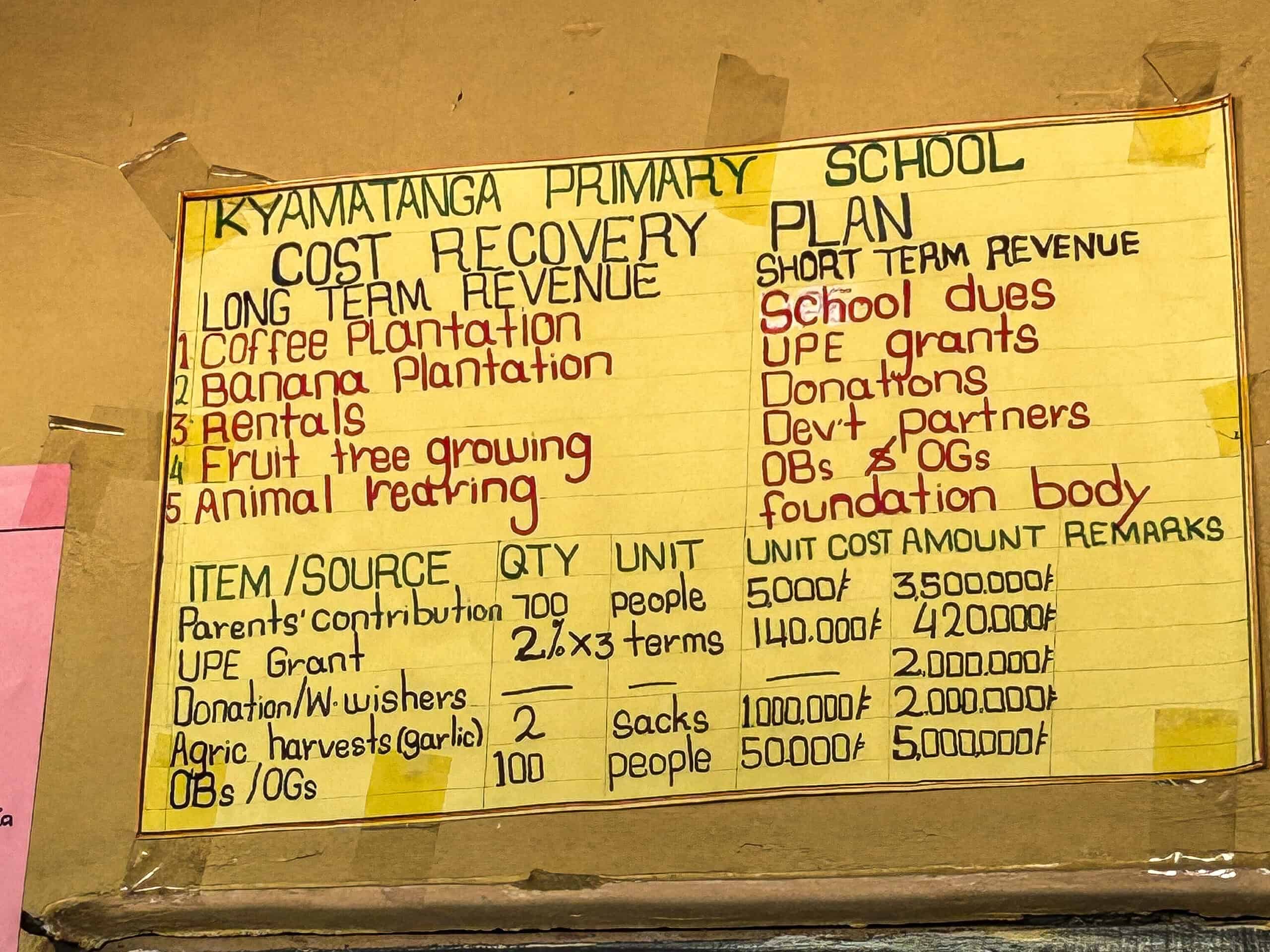
A key focus of the WASH, Learn & Share project is sustainability of the infrastructure and resources for maintenance. Investments in water infrastructure are closely linked to cost recovery planning.
Schools are developing income-generating models through agricultural activities to cover the operational costs of WASH facilities. In 2025, designs and business models for these water kiosks were further developed and prepared for pilot implementation.
“
The cost recovery plan helps us to pay for all this. We have a banana plantation, we raise pigs and we grow trees which we sell as firewood.
— Peter Kusemererwa, Teacher at St. John’s Yerya Primary School
“
Looking ahead: scaling up water systems
While tangible results have been achieved at both school and community level, further impact depends on scaling up. In the next phase, the programme will focus in part on expanding gravity flow schemes, which have a much wider reach and are crucial for long-term water security in the region.
In 2026, work will also continue at the final 6 of 18 schools. These schools will gain access to reliable water infrastructure, improved sanitation facilities and support for sustainable management.
What’s already clear is that investing in water infrastructure in and around schools delivers immediate and measurable results — for pupils and surrounding communities alike.
WATCH THE VIDEO
Discover how access to clean drinking water is already improving daily life in schools and communities in Uganda.
Want to learn more about this project?
Want to know more about
our water projects?
From households in Bangladesh to villages in Nepal and remote schools in Ethiopia — every Made Blue project brings sustainable clean drinking water closer to reality.
Learn about our projects and the impact we’re making together:
Sierra Leone: Water and nutrition at schools
With 7 water kiosks and the provision of milk powder for school meals, we help more than 55,000 people to a better future.
Read moreSierra Leone: Water for a good start in life
We are helping young and expectant mothers and their children live healthy and safe lives by investing in health center facilities in Sierra Leone.
Read moreMalawi: Madzi for Malawi
In Malawi, more than 7 million people lack clean water. We are going to change this by building and repairing water points.
Read moreUganda: Wash, Learn & Share
In this follow-up of our WASH & Learn project in Uganda, we place an even greater emphasis on capacity building and sustainability, with a central role for entrepreneurs, women and girls.
Read moreBangladesh: Mini grids for households
In Bangladesh, mini water networks will provide 33,670 people with direct access to clean drinking water.
Read moreFinancing for WASH entrepreneurs
One in four rural water points in Africa is out of service, often because there is no viable business model for repair and maintenance. We want to change that.
Read moreContribute to Clean Drinking Water
with your organization
We are the Made Blue Foundation.
Our mission: clean drinking water for all.
Want to help make it happen?